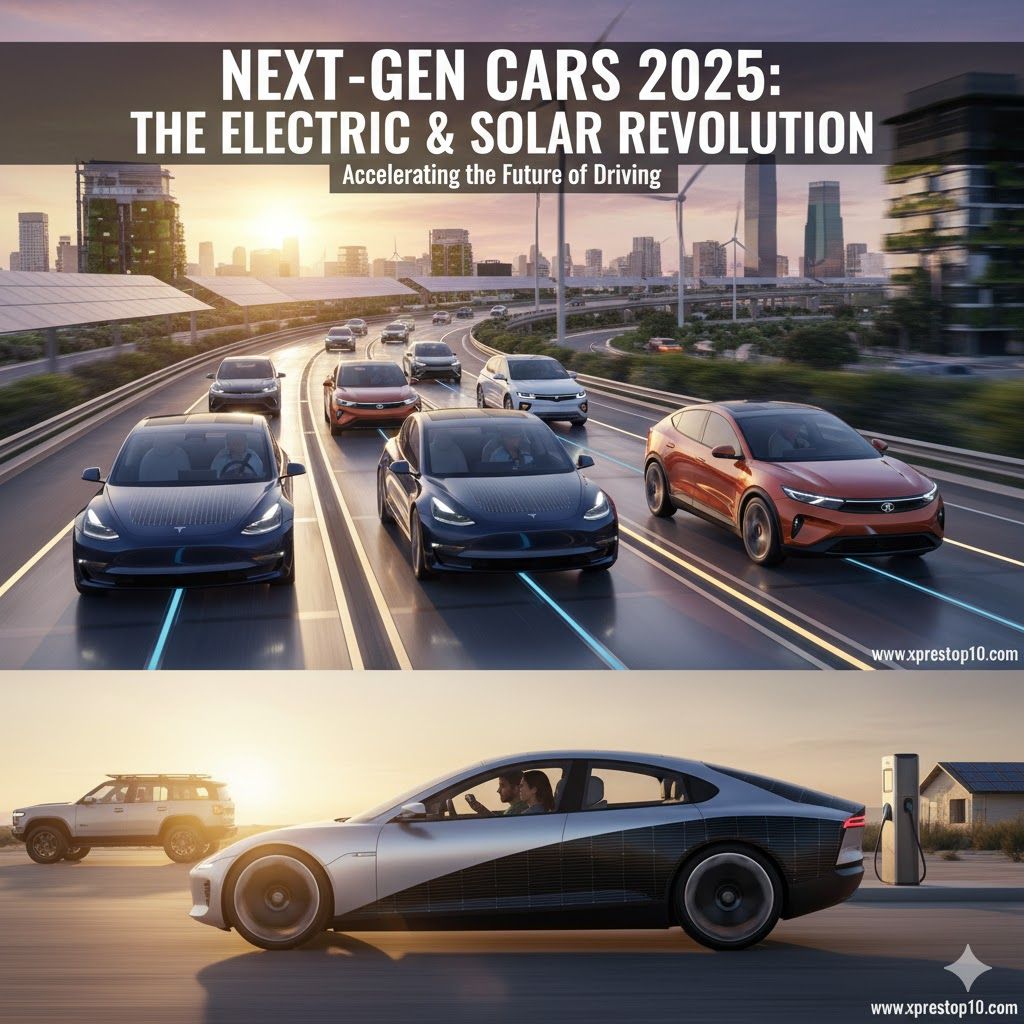
There’s a quiet hum that’s starting to replace the roar of engines around the world. If you listen closely — it’s the sound of the future.
2025 is shaping up to be the year when electric and solar-powered vehicles finally stop being “the next big thing” and start being the norm.
Every major automaker — from Tesla and Tata to Hyundai and Mahindra — has something big up its sleeve. And for car lovers, this shift isn’t just about clean energy. It’s about a new definition of performance, design, and intelligence on wheels.
🌍 A Global Shift: When Innovation Meets Responsibility
Just a decade ago, an electric car meant compromise — short range, long charging times, and prices that made most people shrug and walk away.
Fast forward to 2025, and that image has changed completely.
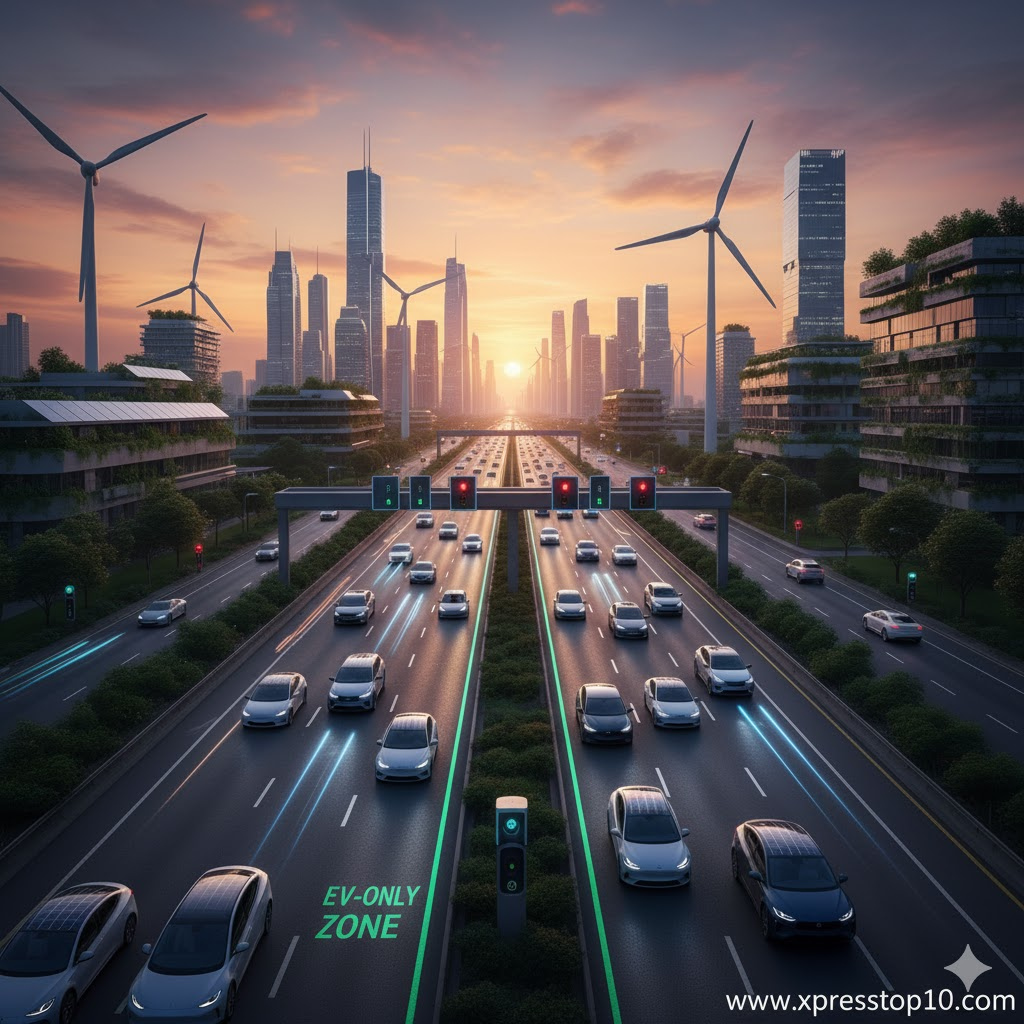
Governments are setting deadlines for phasing out fossil fuels, cities are building EV-only zones, and buyers are now looking at range and charging time instead of horsepower alone.
In India, the FAME-II scheme has made owning an electric car far more practical. Europe is on track for its 2035 petrol ban, and the U.S. Inflation Reduction Act is fueling an EV production boom.
The message is clear: clean mobility isn’t a dream anymore — it’s the default.
⚡ Tesla, Tata & the Titans of Tomorrow
Tesla Model 3 Highland
Tesla’s 2025 Model 3 “Highland” isn’t just a facelift — it’s a quiet revolution. The design is sleeker, sharper, and noticeably smoother on the road.
The new battery pack gives it roughly 600 km of range, but what truly stands out is how refined it feels inside — minimalistic yet futuristic.
It’s proof that Tesla’s years of experimentation are now paying off.
👉 Visit Tesla
Tata Curvv EV
If there’s one name leading India’s EV movement, it’s Tata Motors. After the success of the Nexon and Tiago EVs, Tata’s upcoming Curvv EV is the next big leap.
It looks futuristic — coupe-style SUV lines, a floating dashboard, and digital-first controls — yet remains grounded in affordability.
With a 500 km range and an expected price tag under ₹18 lakh, the Curvv could be the car that finally makes EVs mainstream in India.
👉 Tata EV Portal
Hyundai Ioniq 7
If cars could speak, the Ioniq 7 would whisper “luxury without guilt.”
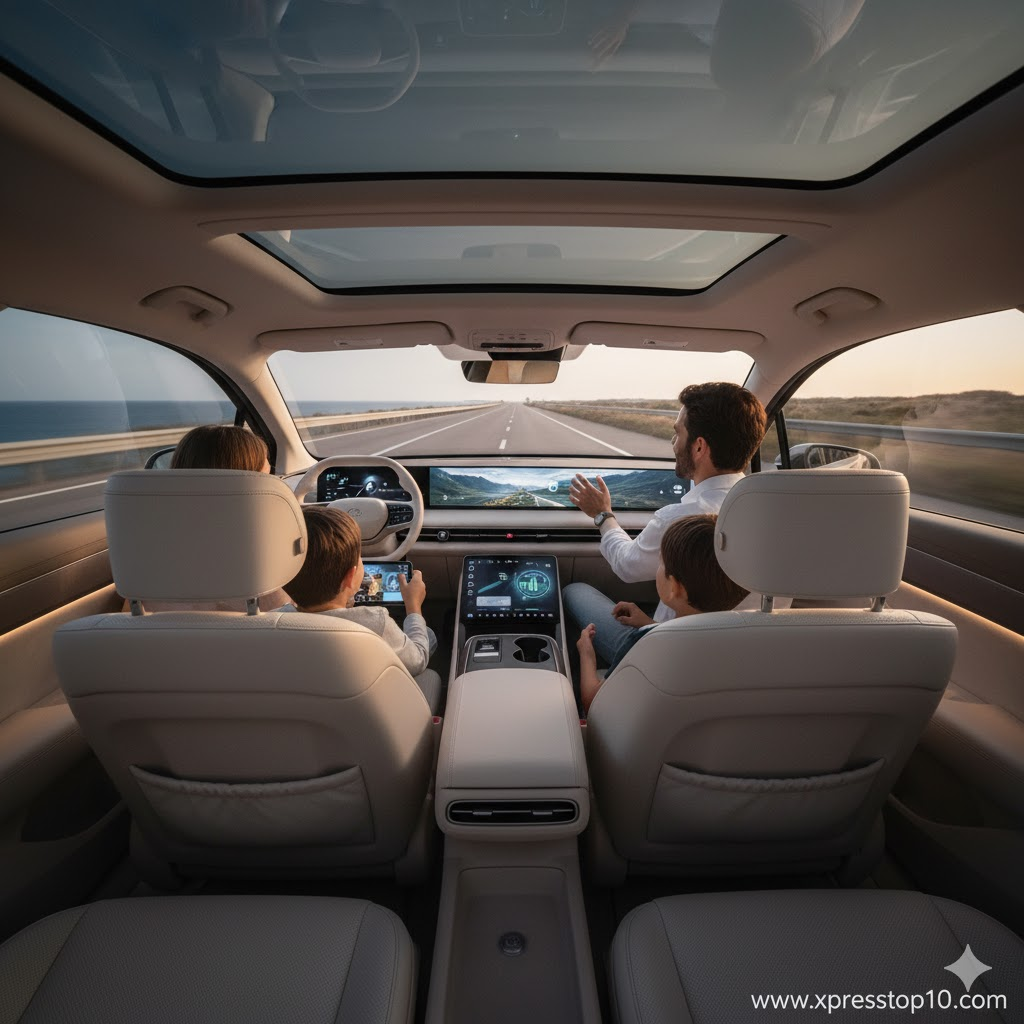
This massive electric SUV carries a 700 km range, ultra-fast 350kW charging, and a lounge-like interior that feels more like a tech retreat than a vehicle.
The highlight? Its Vehicle-to-Load system, which lets you power your gadgets, or even your home, straight from the car’s battery.
👉 Hyundai Ioniq
MG4 EV
The MG4 Electric Hatchback, already a hit in Europe, is making its way to Indian showrooms. Compact yet energetic, it delivers an impressive 450–520 km range.
It’s aimed squarely at urban drivers who want something easy to park, tech-rich, and efficient — without emptying their wallets.
Rivian R2 Compact SUV
For the adventure-loving crowd, Rivian brings the R2. Smaller and cheaper than its predecessor, it still carries that rugged, outdoorsy charm.
Think of it as the electric answer to the Jeep — off-road ready, AI-assisted, and eco-friendly.
☀️ The Solar Frontier: Cars That Charge Themselves
The word “solar car” once sounded like a college science project. Not anymore.
2025 brings a real wave of solar-integrated vehicles that promise to redefine how we think about energy.
Lightyear 2
From the Netherlands comes a stunner — the Lightyear 2.
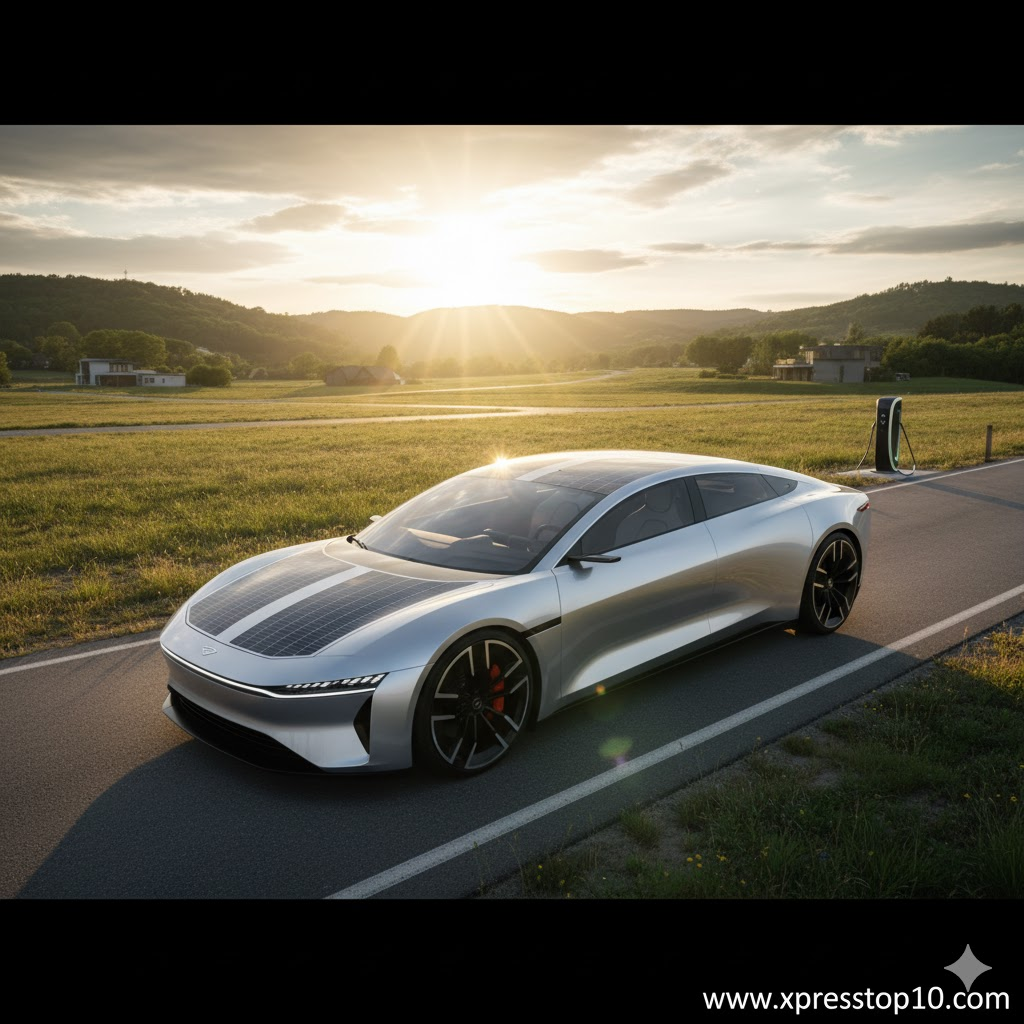
This sleek sedan can add up to 70 km per day using nothing but sunlight. Combined range? About 800 km.
Imagine driving all week without touching a charger. That’s the kind of future Lightyear wants to build.
👉 Lightyear Official
Aptera Solar EV
California-based Aptera looks nothing like your average car — it’s aerodynamic, ultra-light, and runs partly on sunshine.
Its three-wheel design helps it achieve 1,000 km on a single charge, plus about 64 km daily from solar panels.
Aptera’s philosophy is simple: less drag, more distance.
👉 Aptera Motors
🇮🇳 India’s Big EV Leap: Affordable Dreams, Real Progress
India’s EV landscape is exploding with possibilities.
Mahindra is prepping the BE.05, Maruti Suzuki is readying its first eVX SUV, and BYD plans to bring its premium Seal sedan with a massive 650 km range.
And while global giants compete in the ₹20–40 lakh range, local automakers are making EVs available for everyone.
The Tata Tiago EV, MG Comet, and Citroen eC3 are already popular under-₹10 lakh options, giving city drivers a clean alternative to petrol.
Even the charging network is improving. According to NITI Aayog, India will have over 20,000 public charging points operational by the end of 2025 — a fivefold increase from just five years ago.
🔋 Smarter Tech, Cleaner Roads
It’s not just the engines that are changing — it’s the entire experience of owning a car.
Next-gen EVs now come equipped with:
- AI-based predictive maintenance that detects issues before they happen.
- Voice-command systems deeply integrated with smartphones.
- Solid-state batteries that promise faster charging and longer life.
- Over-the-air software updates, turning cars into evolving gadgets.
And then there’s V2G (Vehicle-to-Grid) technology — cars that can send electricity back into your home or the power grid during peak hours.
Imagine your car helping lower your electricity bill — that’s the direction 2025 is heading.
🌱 Why 2025 Is a Turning Point
The coming year won’t just be about shiny new models. It’s about rewriting how we think about transportation.
For the first time, innovation is being driven not just by speed and status — but by responsibility.
Every EV sold reduces dependency on oil, cuts noise pollution, and helps fight climate change.
For families, it means lower running costs. For cities, it means cleaner air and less congestion. And for automakers, it’s a race to build the most efficient machines possible.
The future isn’t roaring anymore. It’s quiet, smart, and sustainable — and it’s pulling into the driveway faster than you think.
🚘 Final Thought: From Engine Sound to Electric Soul
There’s a poetic moment when you first drive an EV — you press the pedal, and instead of noise, you hear nothing.
Just motion. Just power. Just progress.
That’s where the automotive world is heading — from muscle to mindfulness, from fuel to freedom.
So, when you think about buying your next car, maybe the right question isn’t “How powerful is the engine?”
It’s “How kind is it to the planet?”