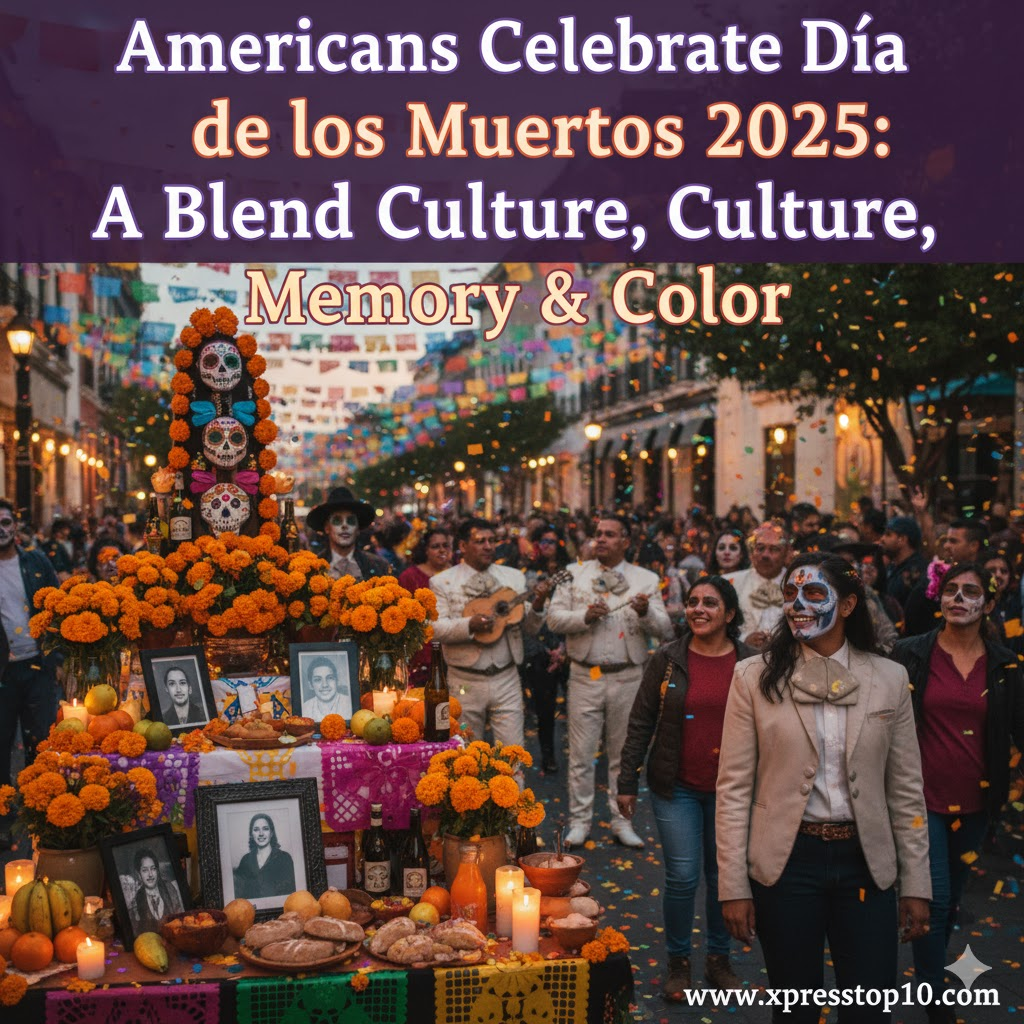
As Halloween fades into the background and November’s crisp air begins to settle in, another celebration lights up America — not with fright, but with love, remembrance, and color. Across cities from Los Angeles to San Antonio, families gather to honor those who came before them through one of the most soulful traditions in the world: Día de los Muertos, or the Day of the Dead.
Though its roots lie deep in Mexico’s history, Día de los Muertos has found a vibrant new home in the United States, where cultures meet and mingle. In 2025, this celebration is more than a holiday — it’s a living, breathing symbol of connection between past and present, heritage and identity.
Table of Contents
🌼 What Día de los Muertos Truly Means
Unlike Halloween, which often focuses on ghosts and ghouls, Día de los Muertos is a celebration of life through the memory of those who have passed away. It’s about love, not loss; joy, not fear.
Originating thousands of years ago among the Aztec and other Indigenous peoples of Mexico, the festival honored death as a natural extension of life. When the Spanish arrived, Catholic influences merged with these ancient beliefs, forming the two-day tradition we know today:
- November 1 – Día de los Angelitos, for children who have passed.
- November 2 – Día de los Muertos, for adults.
Every flower, candle, and photo placed on an altar (called an ofrenda) tells a story — a conversation between worlds.
💬 “It’s about remembering with joy,” says Maria Gonzalez from Tucson, who builds an altar each year for her grandparents. “We don’t mourn them — we invite them home.”
🇺🇸 How Americans Celebrate Día de los Muertos Today
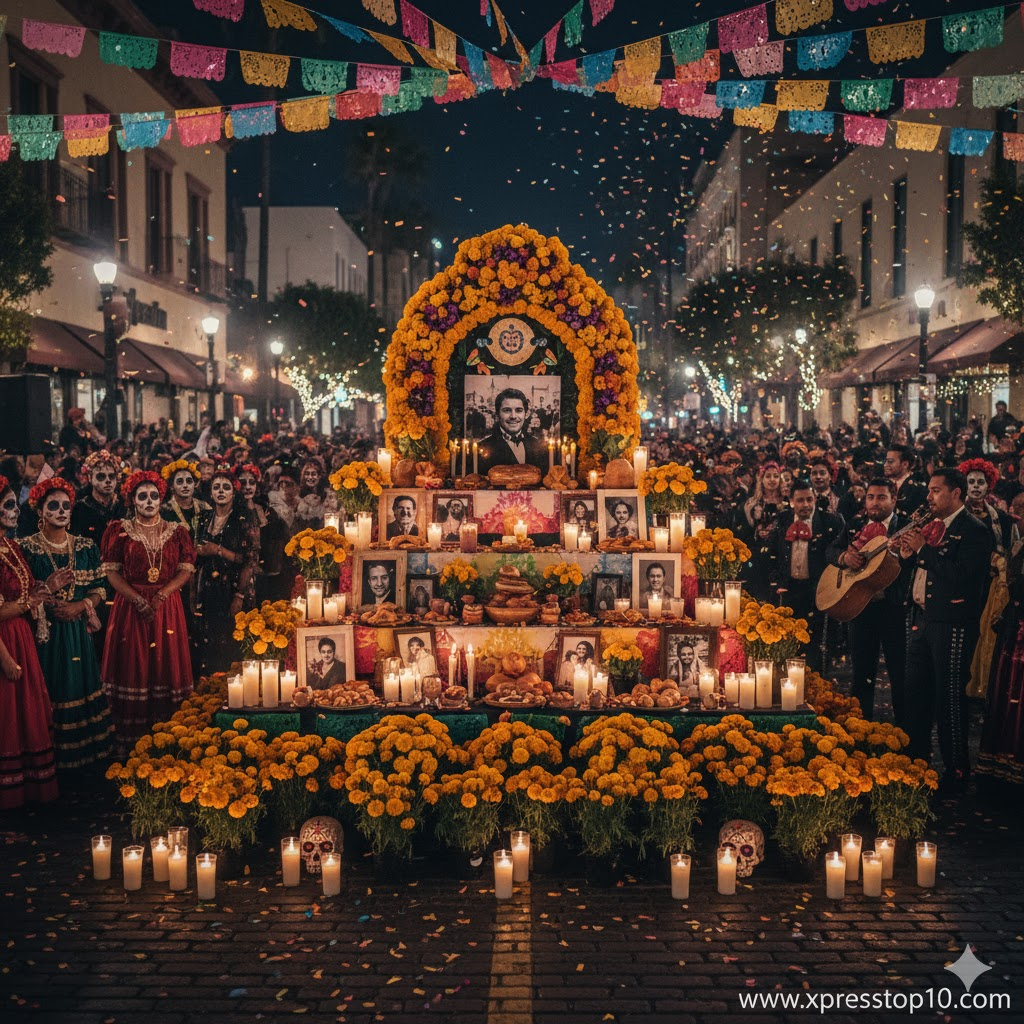
Walk through any major U.S. city at the start of November, and you’ll see how this tradition has evolved — from quiet home altars to citywide festivals filled with music, art, and unity.
1. Community Altars and Offerings
Families create ofrendas at home, decorated with marigolds, candles, and photos. They add food their loved ones once enjoyed — perhaps tamales, mole, or a glass of horchata.
In many places, like Los Angeles’ Grand Park or San Antonio’s Muertos Fest, community altars are open to everyone, turning remembrance into a public art form. Each one tells a unique story, from local heroes to global figures who’ve inspired change.
2. Festivals and Parades
Few sights are more moving than the Hollywood Forever Cemetery’s annual Día de los Muertos festival. Thousands gather, their faces painted like skulls, their hearts full of joy. There’s laughter, mariachi music, dance, and rows of intricate altars under the stars.
Further east, San Antonio’s Muertos Fest celebrates with murals, papel picado, and performances that blend old and new. In Albuquerque, candlelight processions wind through the streets, while Tucson hosts its powerful “All Souls Procession,” honoring the departed with art and community.
🎨 Blending Traditions: The American Touch
What makes Día de los Muertos in the U.S. so special is how it reflects America’s cultural mosaic. While rooted in Mexican tradition, the celebration has grown to include influences from across Latin America and beyond.
In schools, teachers introduce children to the meaning behind sugar skulls and marigolds. Art centers host workshops to teach how to make papel picado banners. Even local libraries organize storytelling nights where families share memories of loved ones.
And thanks to pop culture — from Pixar’s Coco to countless art exhibits — the heart of this tradition has reached millions. Yet, even as it becomes more mainstream, communities remain careful to preserve its soul. Día de los Muertos isn’t about costumes or commercialism; it’s about connection, memory, and respect.
🎭 “It’s a bridge,” says Chicago artist Javier Morales. “For us, it connects generations — my grandmother’s village in Mexico and my daughter’s world in America.”
💀 Who Celebrates Día de los Muertos in America?
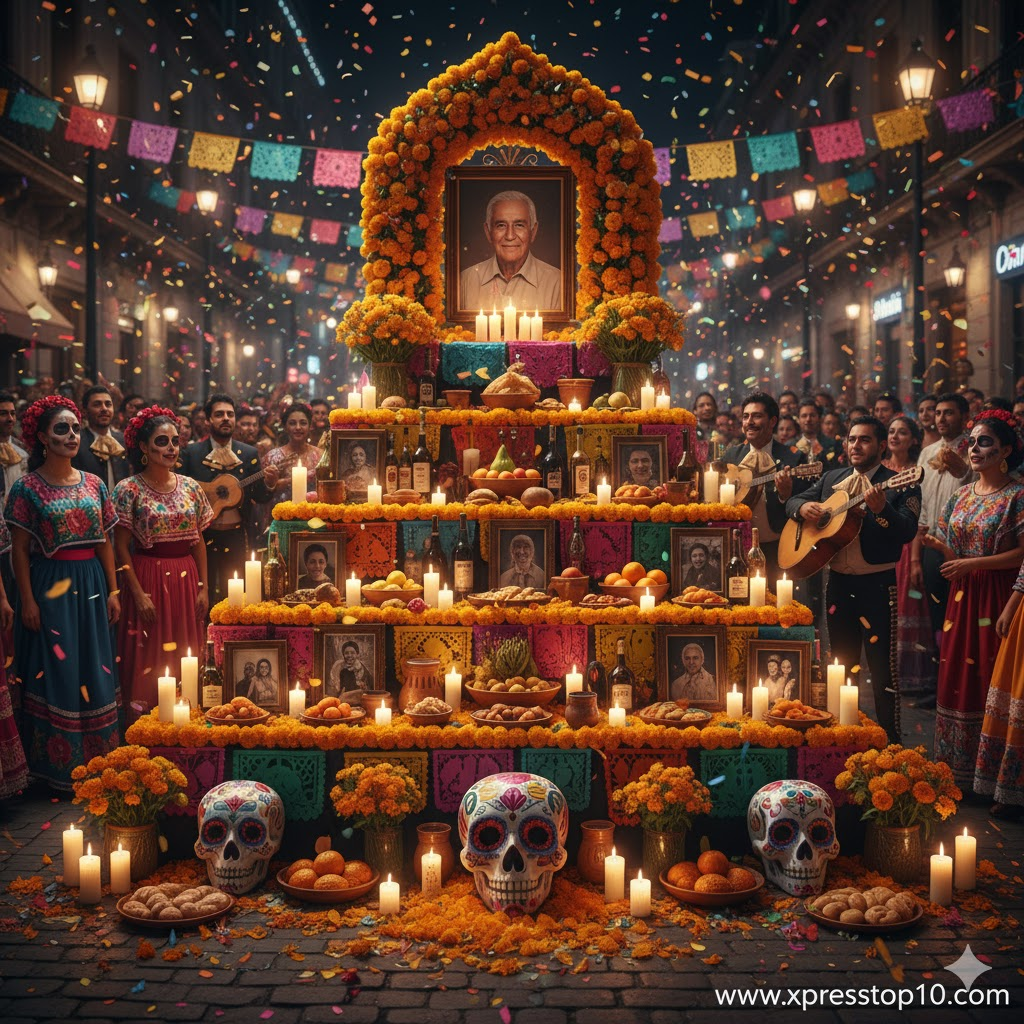
Today, Día de los Muertos belongs not just to one community, but to many. In multicultural cities — from New York to Miami, Denver to Seattle — you’ll find people of all backgrounds setting up altars, painting their faces, or joining parades.
Mexican-Americans remain at the heart of the tradition, but more Americans are embracing its universal message: that love doesn’t end when life does.
Churches, universities, and museums have also joined in. The National Museum of Mexican Art in Chicago hosts one of the largest U.S. exhibitions dedicated to the Day of the Dead, showcasing hundreds of altars and installations created by artists and families alike.
📍 Explore more: National Museum of Mexican Art – Día de los Muertos Exhibition
🌈 Colors, Symbols, and Their Meanings
Every hue in Día de los Muertos tells a story:
- 🟠 Orange & Yellow (Marigolds): The path of the sun, guiding spirits home.
- 💜 Purple: Sorrow and spirituality.
- ❤️ Red: The life and love that endure.
- ⚪ White: Purity and hope for renewal.
From homes to city streets, these colors come alive in murals, candles, face paint, and clothing. They transform neighborhoods into living canvases of remembrance.
🌎 Día de los Muertos Beyond Mexico
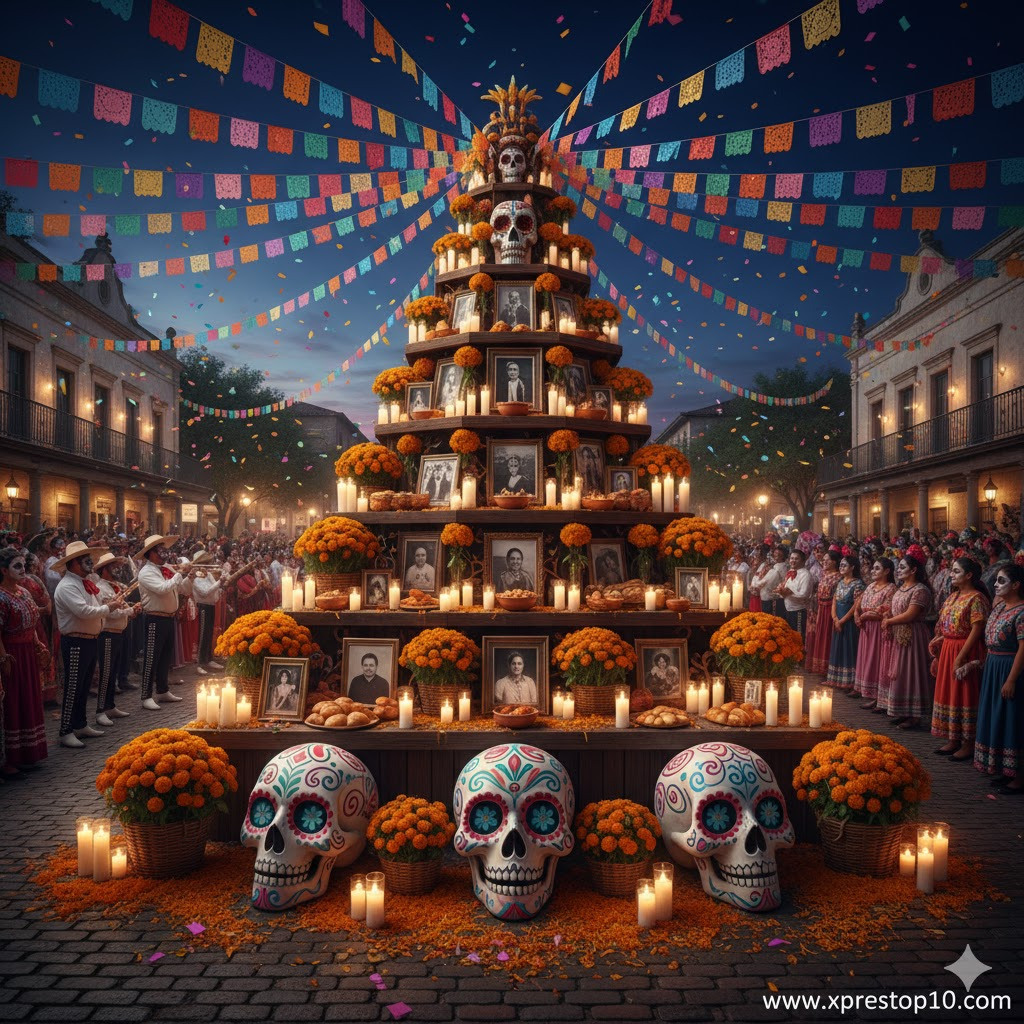
Though Mexico remains the heartland of this celebration, variations exist throughout Latin America. In Guatemala, families send messages to heaven with giant handmade kites. In Ecuador, they share sweet breads called guaguas de pan.
In America, these diverse customs blend beautifully. You might find a Salvadoran family honoring ancestors alongside a Mexican parade, or a Peruvian community joining a candlelight vigil. The result is something uniquely American — a tapestry of remembrance woven from many threads.
🕊️ Why Día de los Muertos Matters More Than Ever
In an age where time moves fast and loss can feel distant, Día de los Muertos brings people back to what matters most — family, gratitude, and memory.
It’s one of the few traditions that transforms grief into celebration. Instead of silence, there’s song. Instead of sadness, there’s color. It teaches a profound truth: that to remember is to keep alive.
In 2025, as America continues to embrace diversity, Día de los Muertos serves as a bridge — a reminder that our stories don’t end; they continue through the people who remember us.
💬 “Every candle is a heartbeat,” says Elena Ruiz, a San Diego teacher who celebrates with her students. “When we light them, our ancestors are near.”
✨ A Celebration of Connection
At its core, Día de los Muertos isn’t just a Mexican or Latin American holiday — it’s a universal human expression of love. It reminds us that remembrance doesn’t have to be somber; it can be beautiful, communal, and full of joy.
So, as marigolds bloom across America this November, take a moment to build your own small ofrenda. Place a photograph, light a candle, or share a favorite story. Whether your roots are in Mexico, the U.S., or anywhere in between, the message remains the same:
In remembering the dead, we keep the living spirit alive.
🔗 Learn More
- Smithsonian Latino Center: Día de los Muertos Explained
- Hollywood Forever Día de los Muertos Festival
- National Museum of Mexican Art – Chicago
SEO Keywords (Naturally Blended):
Día de los Muertos 2025, Day of the Dead in America, who celebrates Día de los Muertos, Day of the Dead traditions, Day of the Dead colors, why is Día de los Muertos celebrated, where did the Day of the Dead originate, Day of the Dead facts, cultural traditions USA.