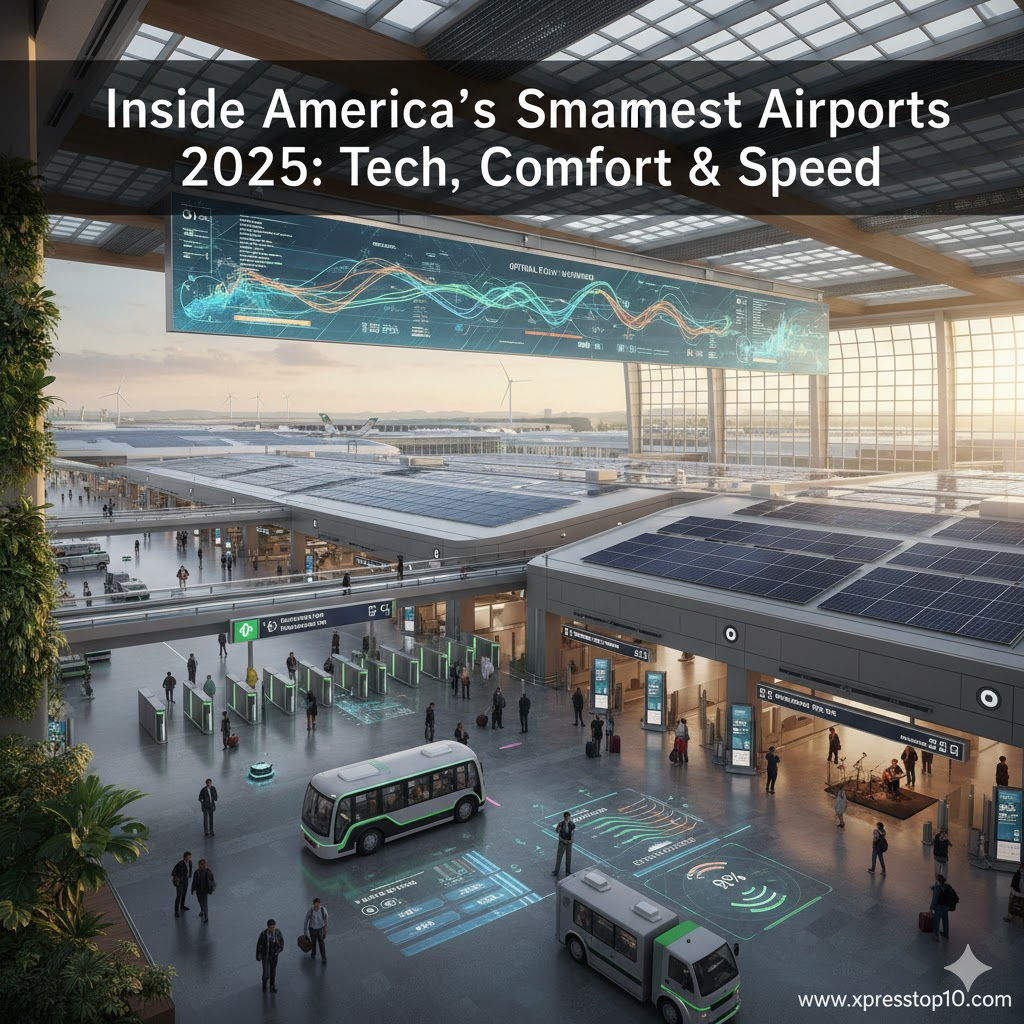
If you’ve traveled in the U.S. recently, you might’ve noticed something different the moment you stepped inside the terminal. Gone are the endless queues, the noisy announcements, and the constant search for a working power outlet. Airports in 2025 America have quietly gone through a transformation—one that combines technology, comfort, and speed in ways that make flying feel almost… easy.
In a world where we expect instant everything—instant coffee, instant messages, instant rides—it’s no surprise that airports are racing to become just as fast and intuitive. What was once a place of waiting has now become a place of moving.
Table of Contents
🛫 The Best Airports in the U.S. (and Why They Feel So Different)
Ask any frequent flyer, “What’s the best airport in America right now?” and you’ll probably hear the same few names: Atlanta (ATL), Dallas–Fort Worth (DFW), Los Angeles (LAX), Seattle–Tacoma (SEA), and Denver (DEN).
But it’s not just about size anymore—it’s about smartness.
Take Atlanta’s Hartsfield–Jackson International Airport. Known for decades as the busiest airport in the world, ATL now uses AI-powered crowd flow systems to predict congestion and redirect passengers before a bottleneck even forms. You walk in and, somehow, security feels smoother, the gates clearer, and boarding less stressful.
Meanwhile, Dallas–Fort Worth has gone green in a big way. The airport runs almost entirely on solar power, and its fleet of ground vehicles is electric. The air feels cleaner; the terminal lights have a natural glow thanks to skylights that reduce energy use.
Then there’s LAX—a name once synonymous with chaos. Today, you can check in using facial recognition, board with a digital ID, and ride an automated people mover that connects every terminal. It feels futuristic, yet surprisingly human.
In Seattle, tech meets heart. SEA has adopted a full biometric travel ID system that allows passengers to move from the curb to the gate without ever taking out a passport or ticket. It’s smooth, quiet, and beautifully Pacific Northwest in its design—lots of wood textures, soft lighting, and local art installations.
🌍 Airports as Smart Cities
Walking through an airport in 2025 feels like entering a self-contained city. You’ll find restaurants that source ingredients from within 50 miles, art that reflects local culture, and massive digital walls displaying live flight data and sustainability metrics.
At DFW, there are more than 50,000 IoT sensors monitoring everything from temperature to restroom cleanliness. Over in Seattle, energy dashboards are on public display so travelers can see how much water or electricity the airport is saving in real time.
These aren’t just gadgets for show. They’re part of a broader mission: to make travel efficient and sustainable.
If you’re curious about the government’s role in this, the Federal Aviation Administration (FAA) runs a great Airport Technology Program that supports many of these innovations.
💡 The Touchless Revolution
Remember when we all used to hand over paper boarding passes and ID cards? In 2025, most U.S. airports have gone touchless—and not just because of health reasons.
Here’s what’s new:
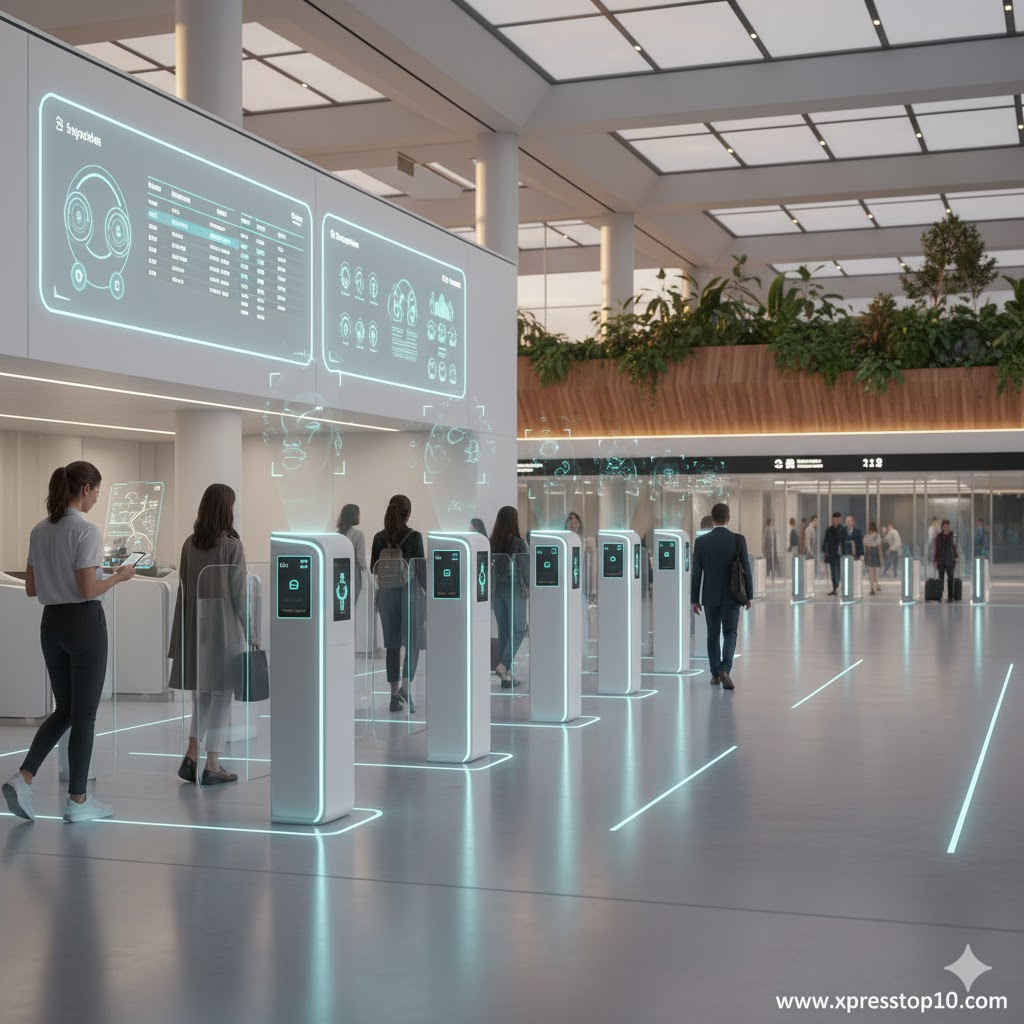
- Biometric gates match your face with your digital ID in seconds.
- Voice-enabled kiosks help you navigate without touching screens.
- Smart luggage tracking through your airline app lets you know exactly where your bag is, every step of the way.
- AI concierges stationed across terminals answer questions in real time.
At Miami International (MIA), AI models even simulate crowd patterns throughout the day to predict which security lanes might get busy. They adjust in real time to keep you moving.
It’s not science fiction—it’s just smart planning.
🌱 The Green Revolution in the Skies
Sustainability has become a quiet obsession in the aviation world. Airports are some of the biggest energy consumers in any city, but that’s changing fast.
- San Francisco International (SFO) proudly calls itself a zero-waste airport.
- Boston Logan (BOS) has installed biofilters that use algae to purify air.
- Denver International (DEN) has electric charging stations not just for cars, but for planes.
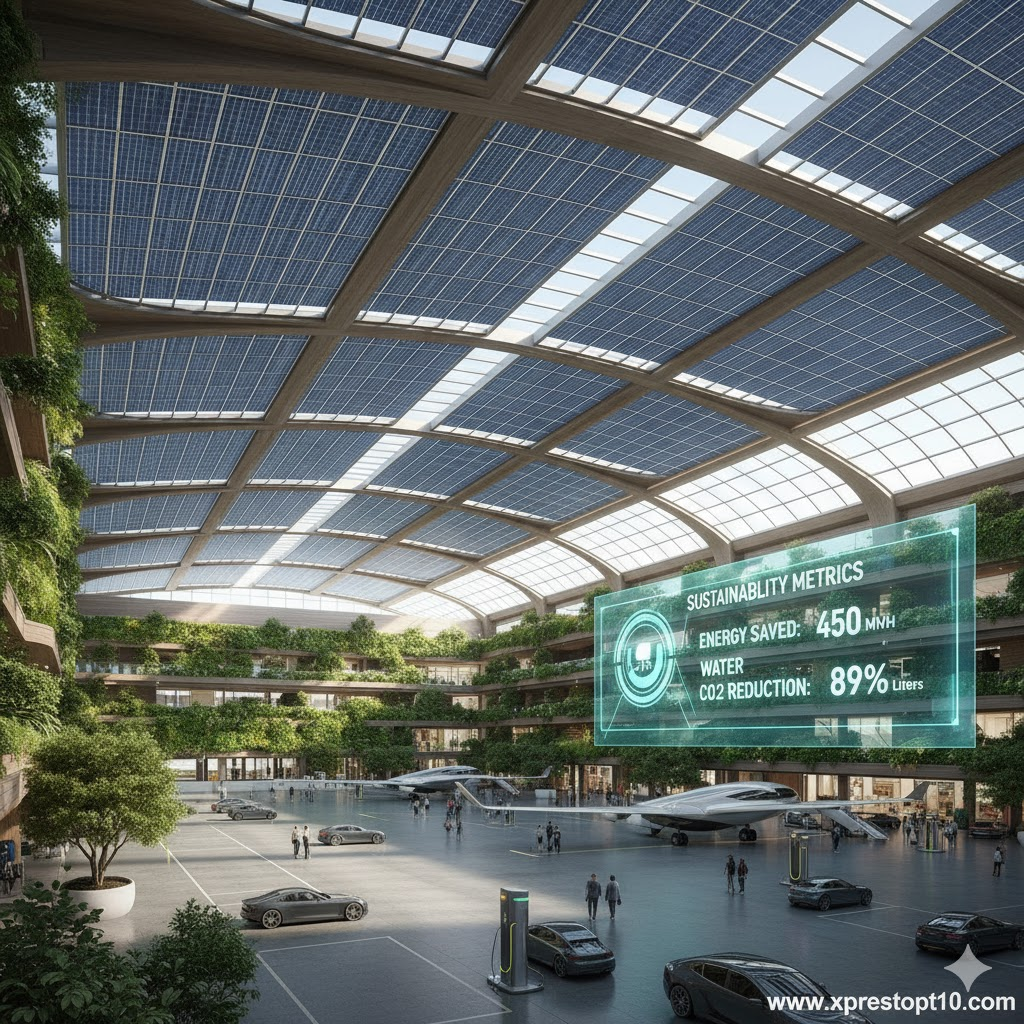
And then there’s DFW, a true pioneer—it’s the first major U.S. airport to achieve carbon neutrality. The place runs on Texas sun and wind power, proving that even massive infrastructure can be environmentally responsible.
Want to see how the U.S. is pushing cleaner fuel? Check out the Sustainable Aviation Fuel (SAF) Grand Challenge at energy.gov.
⚙️ Technology That’s Changing Everything
So, what exactly makes an airport “smart” in 2025? It’s not just flashy gadgets—it’s how everything connects.
- Private 5G networks allow ground teams to communicate instantly.
- Robots clean and sanitize high-traffic areas using UV light.
- AI monitors elevators, escalators, and baggage belts to predict failures before they happen.
- Augmented reality maps guide you through terminals on your phone.
- E-VTOL (air taxi) hubs are being built in L.A. and New York for short-distance hops.
Even the aircraft are getting smarter. New planes in 2025 are lighter, quieter, and run on hybrid-electric systems. The line between airport and airplane innovation is getting thinner by the day.
🧭 The Airport of 2030: A Glimpse Ahead
If 2025 is the year of touchless travel, 2030 will be the era of total automation.
Experts predict airports will:
- Integrate Hyperloop connections for city-to-airport travel.
- Use drone fleets to handle maintenance and cargo transfers.
- Feature AI air traffic control, minimizing flight delays.
- Offer fully personalized travel experiences, from seat selection to lounge access, guided by AI preferences.
It’s hard to imagine, but the evolution of airports mirrors our lives—more digital, more connected, and surprisingly human in design.
A Forbes Travel report suggests passengers in 2030 could spend up to 40% less time getting from curb to gate compared to 2020. That’s not efficiency—it’s transformation.
🏙️ How Many Airports Does America Have in 2025?
According to the FAA, the U.S. has roughly 5,080 public-use airports this year, with around 500 handling commercial flights. Many smaller regional airports—like Boise, Raleigh–Durham, and Tampa—are modernizing just as quickly as their big-city counterparts.
They might not have luxury lounges, but they do have solar roofs, EV parking, and digital boarding. The aviation industry is no longer defined by size—it’s defined by smartness.
🧠 The Role of Emerging Aviation Technologies
If there’s one thing the U.S. aviation industry does well, it’s innovation.
- Hydrogen-powered aircraft are being tested in California.
- AI airspace monitoring is being used in Denver and Phoenix.
- Noise-canceling runway systems are helping neighborhoods near airports stay quieter.
- Virtual reality pilot training is making aviation safer and more efficient.
You can explore more about these technologies on the FAA’s Emerging Tech page.
It’s not about replacing humans—it’s about making air travel feel smoother, smarter, and cleaner.
💺 Comfort Is King
Tech may drive airports, but comfort defines them. In 2025, airports finally feel like places designed for people, not just passengers.
Seattle’s “Experience the Sound” stage hosts live local music.
LAX’s Delta Sky Club offers a wellness zone with circadian lighting and meditation pods.
Denver’s terminal has green walls, soft acoustic panels, and even nap pods for layover travelers.
Food courts now feature local restaurants, craft coffee, and quiet corners with built-in chargers. These small details make the journey feel less rushed—and more real.

✈️ Final Thoughts: The Future Has Landed
Airports have come a long way from being loud, confusing spaces. They’re now living, breathing ecosystems of technology, comfort, and sustainability.
As you roll your suitcase through a polished terminal, you’re not just heading to a flight—you’re walking through the future of how humans move.
The sky might still be the limit, but for America’s smartest airports in 2025, it feels like we’ve already taken off.
External Sources:
- FAA Airport Technology
- Forbes Travel Future of Flying
- Energy.gov – Sustainable Aviation Fuels
- CNBC Travel – Smart Airports 2025
Keywords: Inside america’s smartest airports 2025 tech comfort & speed list, airport innovations, aviation industry trends 2025, evolution of airports, emerging aviation technologies, new planes 2025, airports 2030.