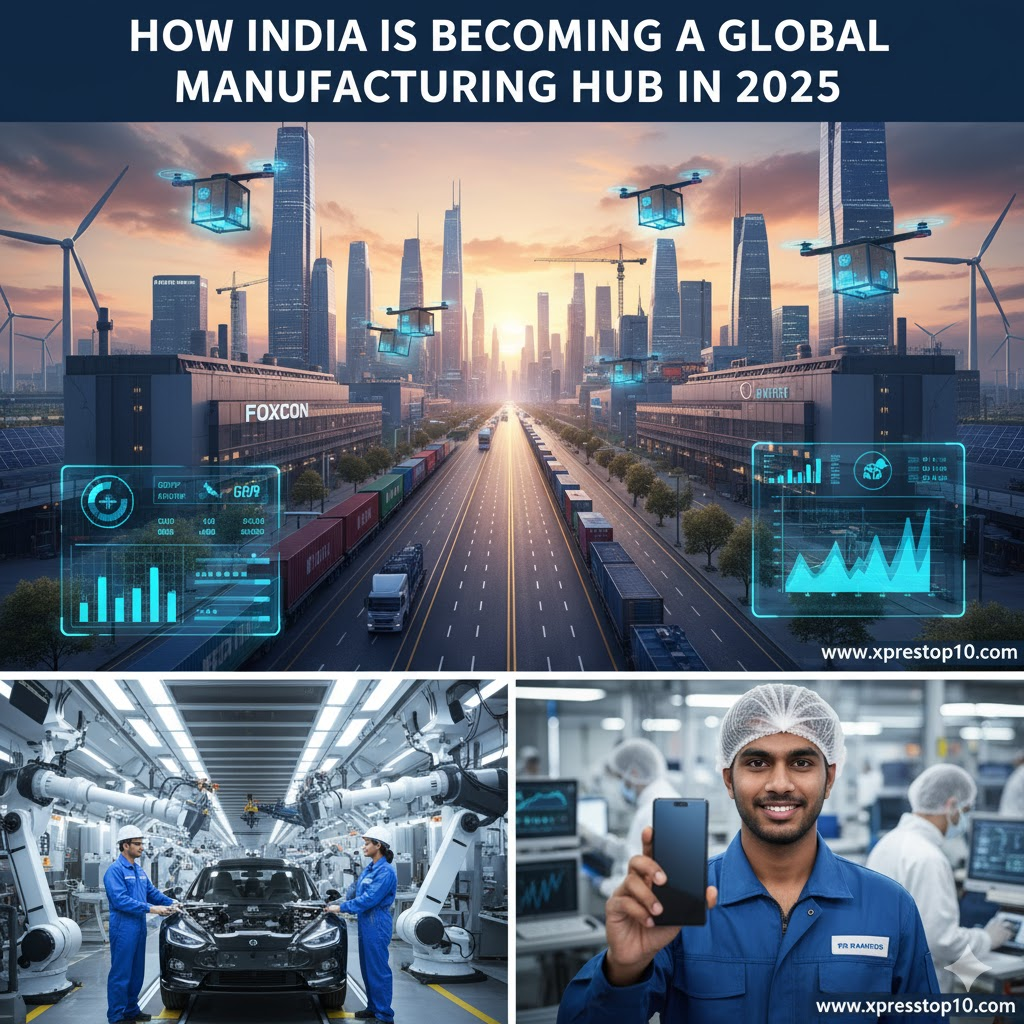
If you drive down the Chennai–Bengaluru industrial corridor today, you’ll see something remarkable — endless rows of factories, new warehouses, and cranes shaping the skyline. It’s not just about buildings; it’s about a nation quietly building its identity as the world’s next manufacturing powerhouse.
Ten years ago, people often questioned India’s industrial potential. “Can India really compete with China?” they’d ask. Today, the question has changed: “How far can India go?”
Table of Contents
The Evolution: From Make in India to Making for the World
When the Make in India campaign was launched back in 2014, it sounded ambitious — maybe even idealistic. But in 2025, that idea has matured. It’s no longer about slogans; it’s about results you can see, touch, and measure.
Factories in Tamil Nadu, Gujarat, Maharashtra, and Telangana are buzzing with activity. Skilled engineers, once desperate to work abroad, are now designing products that ship to 40+ countries. India’s not just manufacturing for itself anymore — it’s manufacturing for the world.
This shift didn’t happen overnight. It came from years of groundwork — policy reforms, infrastructure investment, and an unshakeable belief that India could stand shoulder to shoulder with global giants.
India’s Numbers Tell a Strong Story
Here’s what’s happening right now, in 2025:
- The manufacturing sector is growing at nearly 8%, faster than most major economies.
- It now contributes about 18% to India’s GDP, with a target of 25% by 2030.
- India ranks 5th globally in manufacturing output, right behind China, the U.S., Japan, and Germany.
- Exports have crossed $500 billion, with electronics and automobiles leading the pack.
- More than 10 million new jobs have been created since the Production-Linked Incentive (PLI) scheme began.
These aren’t just statistics — they’re signs of an economy finding its rhythm.
What’s Fueling India’s Manufacturing Momentum
1. The Policy Push
The government’s PLI scheme has been the real turning point. It rewards companies for producing in India — not just assembling, but building. That’s why Apple, Foxconn, and Tesla are here, scaling production lines and expanding faster than expected.
2. The Workforce Edge
India’s youth is its biggest strength. With an average age of just 28, the country has a young, trainable workforce that understands both technology and traditional craftsmanship.
That mix — of modern and local skill — is something few countries can replicate.
3. Smarter Factories, Better Tech
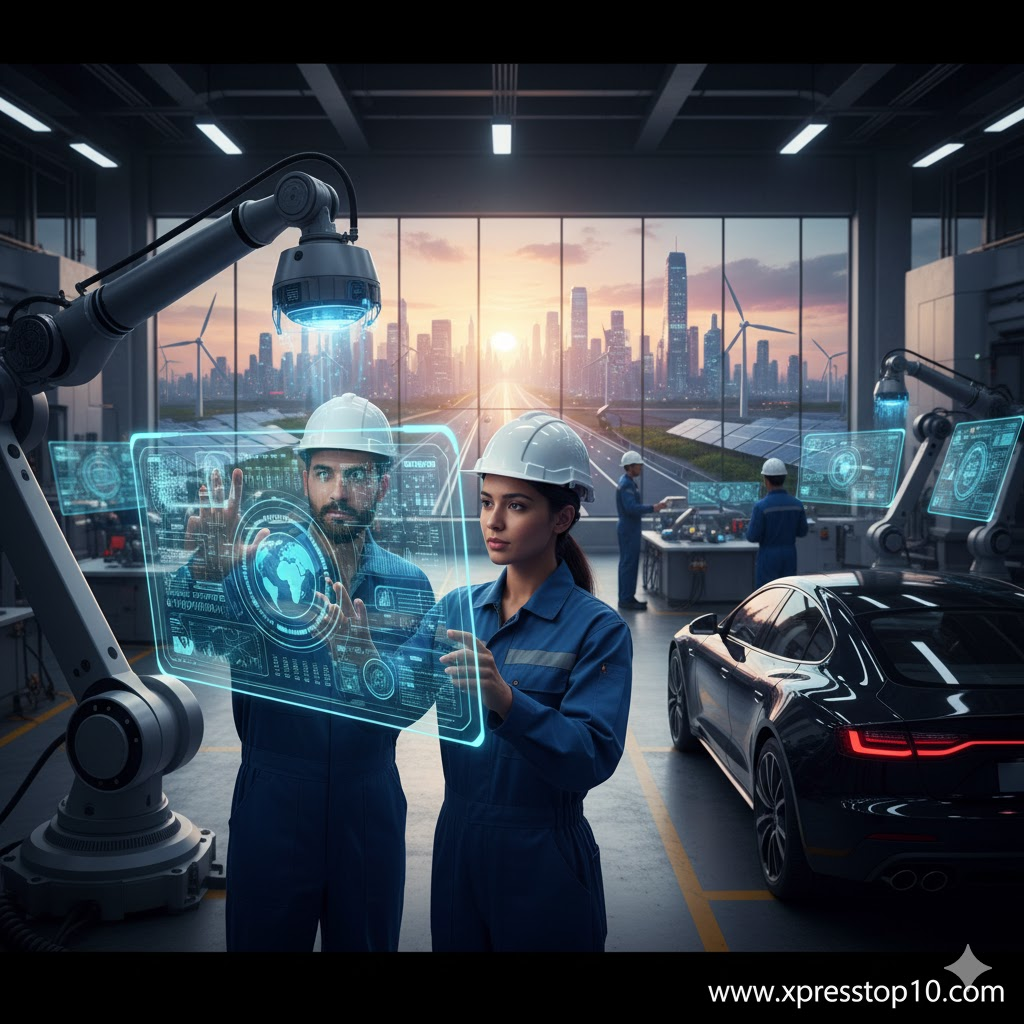
If you walk into an advanced manufacturing unit in Pune or Bengaluru, it feels like stepping into the future. Robots work beside humans, machines analyze data in real-time, and AI systems predict maintenance before something breaks.
Companies like Siemens India and L&T are turning old-style factories into digital powerhouses.
4. Infrastructure That Finally Works
From expressways to industrial corridors, India’s connectivity is being rebuilt. The Gati Shakti Mission and National Infrastructure Pipeline have shortened supply routes dramatically — what used to take 48 hours to move goods can now take 20.
5. The Global Shift from China
After the pandemic, the world started diversifying supply chains — a move often called the “China+1” strategy. For many, India became that “+1.” Political stability, cost competitiveness, and English-speaking talent made the country an obvious choice.
India’s New Industrial Map
Each region has found its niche in this manufacturing renaissance:
- Tamil Nadu: Automobile, electronics, renewable energy
- Gujarat: Semiconductors, petrochemicals, textiles
- Maharashtra: EVs, aerospace, heavy engineering
- Karnataka: Defense, tech-based manufacturing
- Uttar Pradesh: MSMEs, defense corridor development
- Telangana & Andhra Pradesh: Solar panels, electronics, pharma
The energy in these states feels different now — practical, fast-moving, confident.
The People Behind the Progress
Numbers tell one part of the story. People tell the rest.
In Hosur, Tamil Nadu, 30-year-old Ramesh starts his day at a Foxconn plant that assembles iPhones. His father was a farmer; Ramesh builds smartphones that sell in Paris and New York.
“We used to send workers abroad for good jobs. Now people come here,” he says, half-smiling, half-proud.
Up north, Priya, an electrical engineer in Pune, works on EV battery designs for Tata Motors.
“We used to read about Tesla in magazines. Now we’re part of that world,” she says, while adjusting a prototype circuit.
These stories are small pieces of a much bigger puzzle — a workforce rediscovering its value.
Sectors Leading India’s Charge
- Electronics: Foxconn and Pegatron expanding Apple production.
- EVs: Tata Motors, Ola Electric, and Tesla India powering a new green revolution.
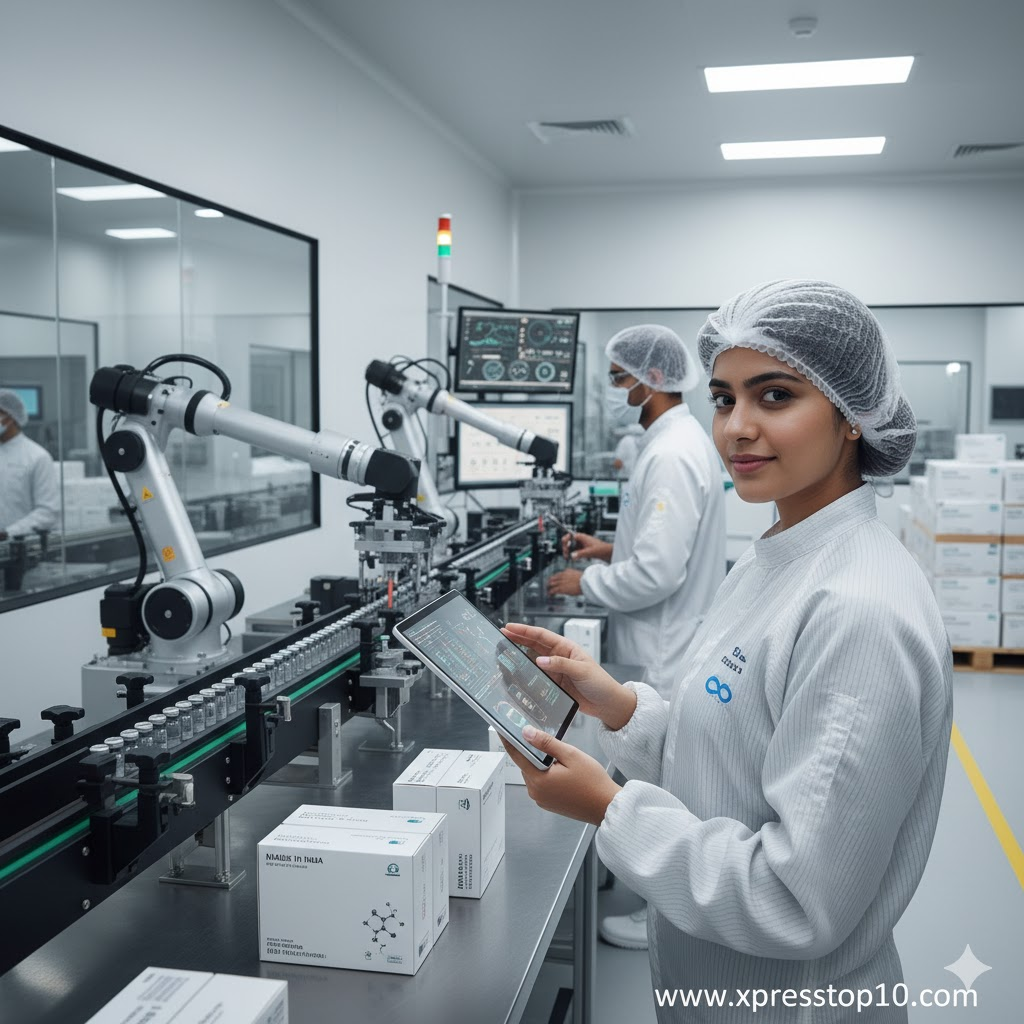
- Pharma: India still holds its crown as the Pharmacy of the World, exporting 20% of global generics.
- Defense: DRDO and HAL are developing drones and fighter parts for export.
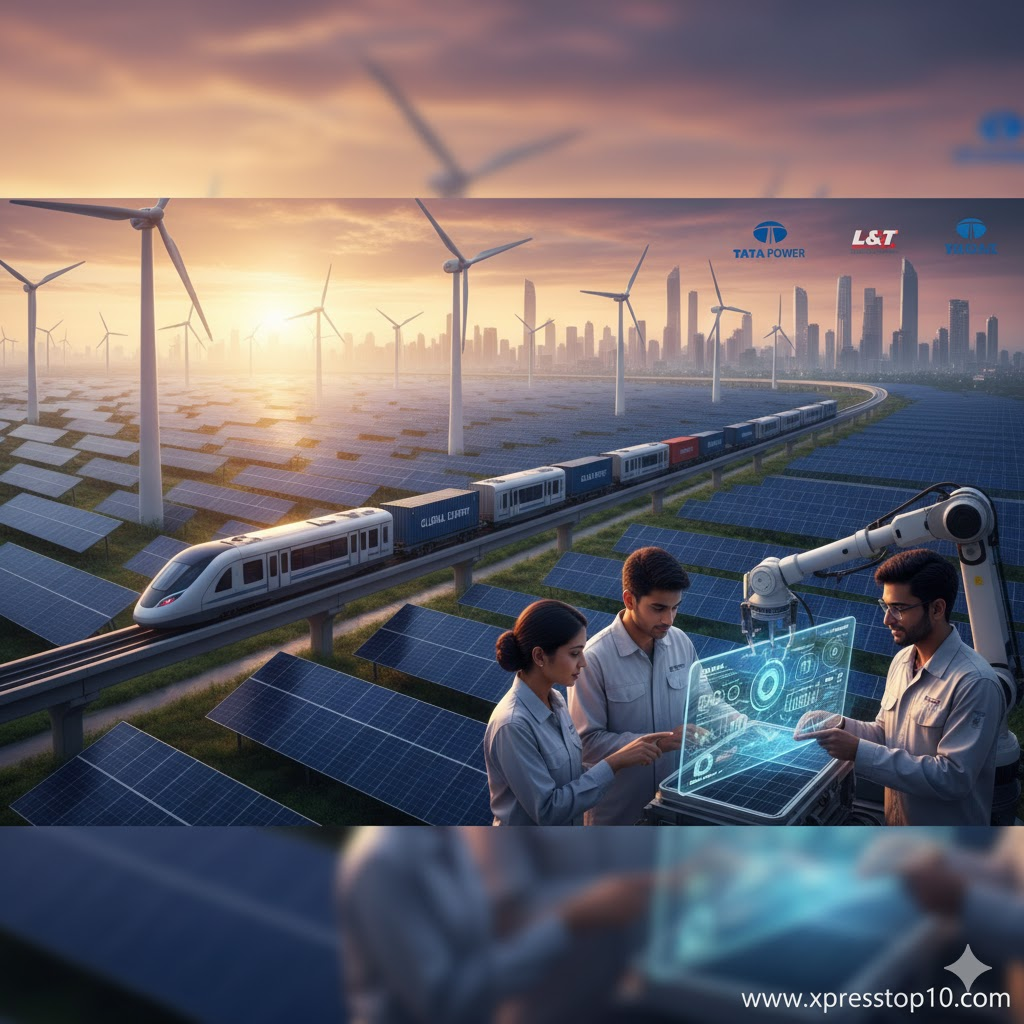
- Renewables: Solar and wind equipment manufacturing is now one of India’s fastest-growing export categories.
Yes, There Are Challenges
India’s rise isn’t smooth. There are still bottlenecks — bureaucratic paperwork, land acquisition delays, and skill mismatches in advanced tech roles.
Some smaller manufacturers struggle with access to capital or technology upgrades. And power supply, though improved, can still be unpredictable in certain regions.
But what’s changed is the mindset. Instead of waiting for the government to fix everything, many businesses are taking ownership — investing in training, R&D, and digital adoption.
Will India Be a Developed Country by 2025?
That’s the big question everyone asks. Realistically, India won’t tick every “developed” box just yet. But it’s on the path.
Economists expect India to become the third-largest economy by 2030, thanks to manufacturing, tech exports, and services. More importantly, India’s development story is now visible on the ground — in small towns where new factories rise, where young engineers learn coding beside machines, and where small workshops are exporting globally for the first time.
Looking Ahead: The 2030 Vision
Over the next five years, India’s focus will shift from “more factories” to “better factories.”
That means green manufacturing, renewable energy integration, and circular economy practices. The goal is clear — growth without compromising the planet.
The rise of semiconductor production in Gujarat, defense corridors in Uttar Pradesh, and EV clusters in Tamil Nadu shows what’s coming: a decentralized, tech-powered, export-driven India.
The Bottom Line
India’s manufacturing success in 2025 is not about luck. It’s about grit, policy, and people.
It’s about the farmer’s son building circuit boards, the engineer coding robots, and the entrepreneur setting up a plant where none existed before.
The phrase “Made in India” used to sound like an aspiration.
Now, it sounds like a global statement — one that says, “We’re ready. The world can count on us.