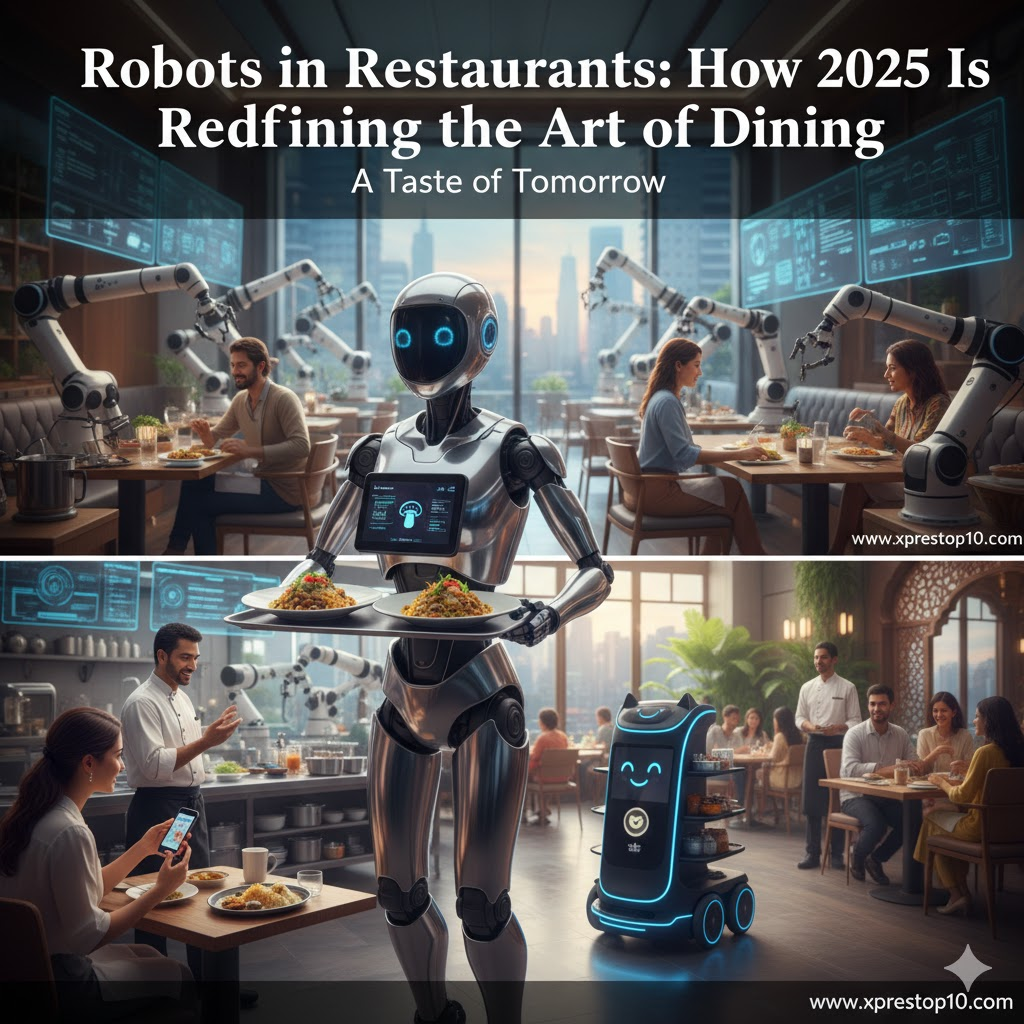
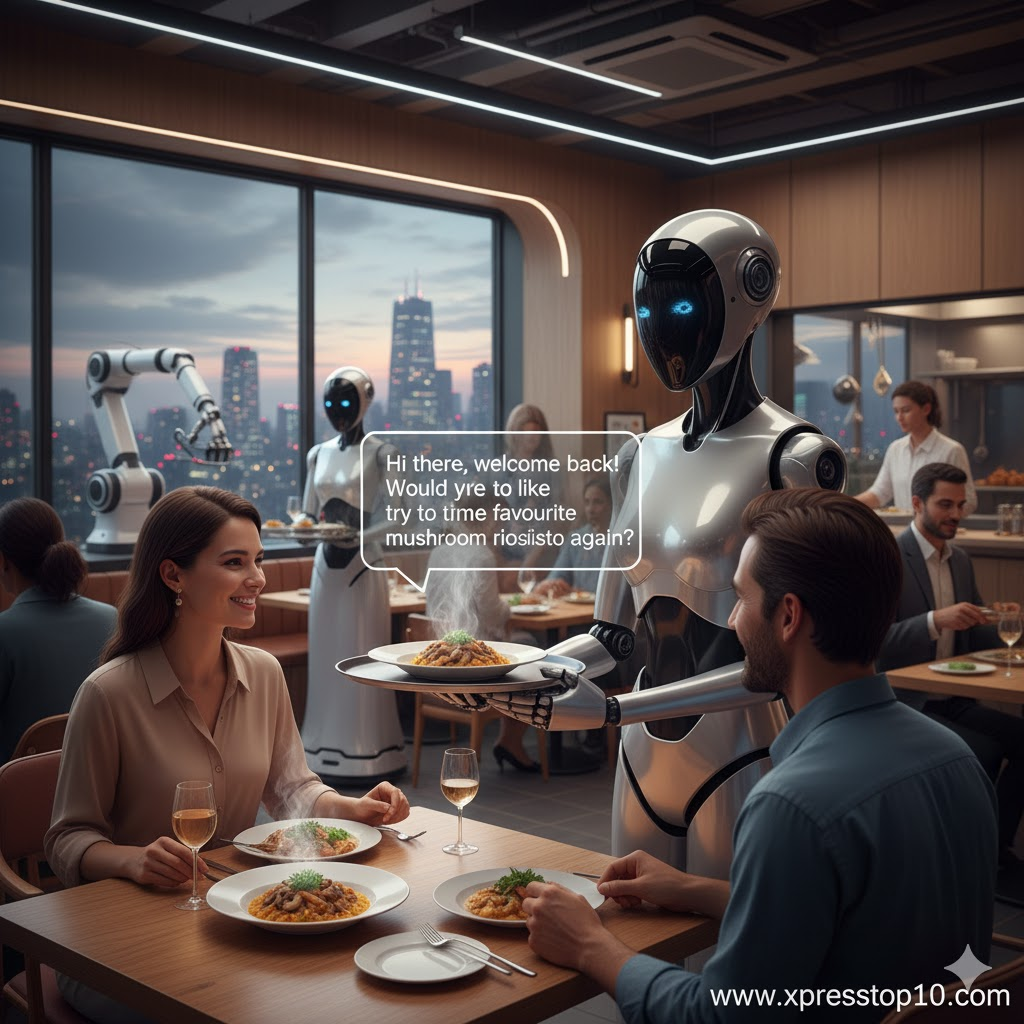
Picture this — you walk into a restaurant in 2025 and instead of being greeted by a server in uniform, a sleek robot rolls up to your table and says,
“Hi there, welcome back! Would you like to try your favorite mushroom risotto again?”
It sounds futuristic, but it’s already happening. Across cities from Tokyo to Bengaluru, restaurants are letting robots take over the routine tasks — while humans focus on creativity, flavors, and connection. The idea isn’t to replace people. It’s to make dining smoother, cleaner, and maybe even a little magical.
Table of Contents
🍽️ A Taste of Tomorrow
For decades, dining was about good food and good service. Now, it’s also about smart service. The hospitality world has been facing labor shortages and rising costs since the pandemic, pushing restaurants to look toward automation.
That’s when AI stepped into the kitchen.
Boston’s Spyce, built by MIT engineers and later acquired by Sweetgreen, was one of the early examples. Their robot-powered kitchen could prepare entire meals in minutes, with perfect portioning and no mess. California’s CaliExpress by Flippy took it a step further — a robotic arm that flips burgers, fries potatoes, and never complains about long shifts.
It’s not science fiction anymore. It’s real, and it’s working.
🤖 What an “AI Restaurant” Really Means
So, what exactly makes a restaurant “AI-powered”?
It’s not just about having robots on wheels. It’s about creating a system that thinks and adapts — from taking your order to planning tomorrow’s menu.
Here’s how it feels in practice:
You enter a café, and the AI system recognizes you through your loyalty app. It remembers your last order and asks if you’d like to try a new variation. Meanwhile, a robotic chef prepares your food precisely the way you like it — every single time.
According to Deloitte’s report on AI in restaurants, about 40% of quick-service chains are already testing AI-driven kitchens or virtual assistants.
It’s less about replacing the chef and more about helping the chef do what they love — create, not calculate.
🔮 The Future of Robotics in 2025
By 2025, robotics has quietly become part of daily life. In restaurants, it’s not a novelty anymore — it’s a necessity.
Here’s how it’s changing the scene:
- Robot Chefs that can chop, stir, and plate food without supervision.
- AI Waiters like BellaBot or Servi, gliding between tables with a friendly beep.
- Voice-activated Ordering where you simply say your order aloud — no menu needed.
- Smart Inventory Systems that predict what ingredients you’ll run out of next week.
- Energy-Efficient Automation reducing food waste and power use.
It’s the same food we love — just prepared by machines that never get tired or distracted.
🇮🇳 India’s Tryst with Robotic Dining
In India, the blend of tradition and technology has created some truly unique dining experiences.
In Chennai, the Robot Restaurant became a local sensation — robots glide gracefully across the floor carrying biryanis and sizzlers.
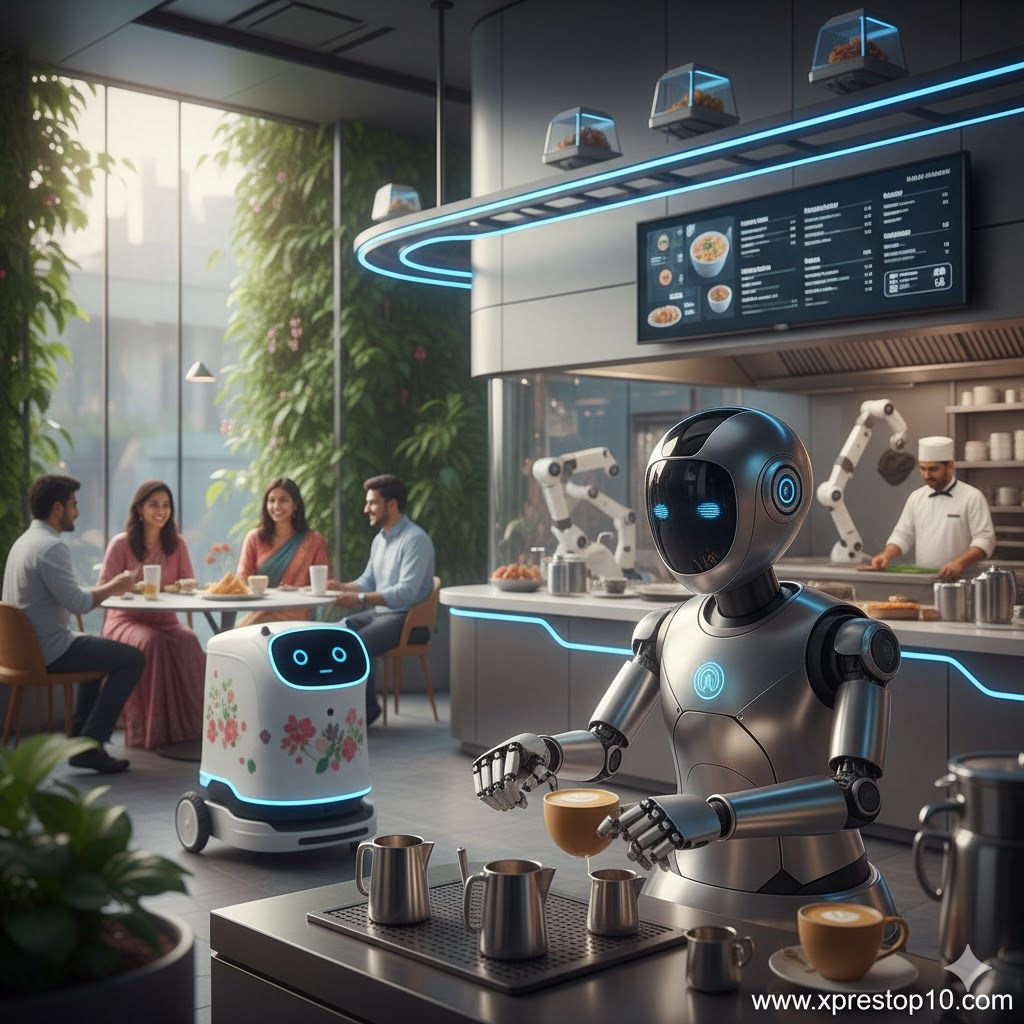
In Hyderabad, BumbleBee Café introduced a robotic barista that makes your coffee with machine-perfect precision.
And in Delhi NCR, Yum Yum Cha began using AI-assisted kitchen tools to cut prep time and maintain consistency.
According to NRAI India, the Indian restaurant industry could cross ₹7.5 lakh crore by 2025, and automation is expected to play a big part in that growth.
It’s a fascinating mix: robots doing the serving, but human smiles still leading the show.
🍕 The 30/30/30 Rule — and Why It Matters
A new concept has been buzzing in the restaurant world — the 30/30/30 rule. It’s not an AI law, but a management philosophy that perfectly fits the modern restaurant.
Here’s how it breaks down:
- 30% Kitchen Operations handled by automation.
- 30% Customer Service guided by AI tools or chatbots.
- 30% Delivery & Logistics managed through predictive algorithms.
- The final 10%? Pure creativity — reserved for innovation and human touch.
It’s a balance that ensures tech never overshadows the soul of dining.
🍲 How AI Is Quietly Changing Restaurants
If you think AI in food is all about robots, think again.
The real revolution is happening in the background — in data, personalization, and sustainability.
- Personalized Menus: Apps like Zomato and OpenTable already suggest dishes based on your past orders.
- Smarter Marketing: Tools like Aivatar allow restaurants to send perfectly timed offers.
- Menu Optimization: AI analyzes which dishes sell best and adjusts the pricing.
- Restaurant Design: Platforms such as Planner 5D and RoomGPT are helping owners design efficient, beautiful interiors — often before the first brick is laid.
AI is becoming the quiet partner that makes everything — from the lighting to the layout — flow better.
🌏 Around the World with Robot Dining
- In Tokyo, “Pepper Parlor” uses humanoid robots that talk and serve dessert.
- In Shanghai, “Robot.He” by Alibaba delivers meals through a magnetic rail system.
- In Dubai, “Future Café” features AI-powered baristas who brew your latte to perfection.
- In Los Angeles, “Creator” serves burgers made entirely by a robotic kitchen.
Each city is experimenting in its own way, proving that technology can blend seamlessly with taste.
💬 Will Robots Replace People?
It’s the question everyone asks.
The truth? Probably not.
Even the smartest robot can’t sense the emotion behind a customer’s “thank you,” or adjust seasoning based on intuition. Robots are brilliant at precision — but hospitality is about connection, and that remains deeply human.
Think of robots as teammates, not threats. They handle the repetitive work, while humans focus on creativity, empathy, and storytelling.
🌿 Sustainability Served Fresh
There’s another advantage to automation — it’s greener.
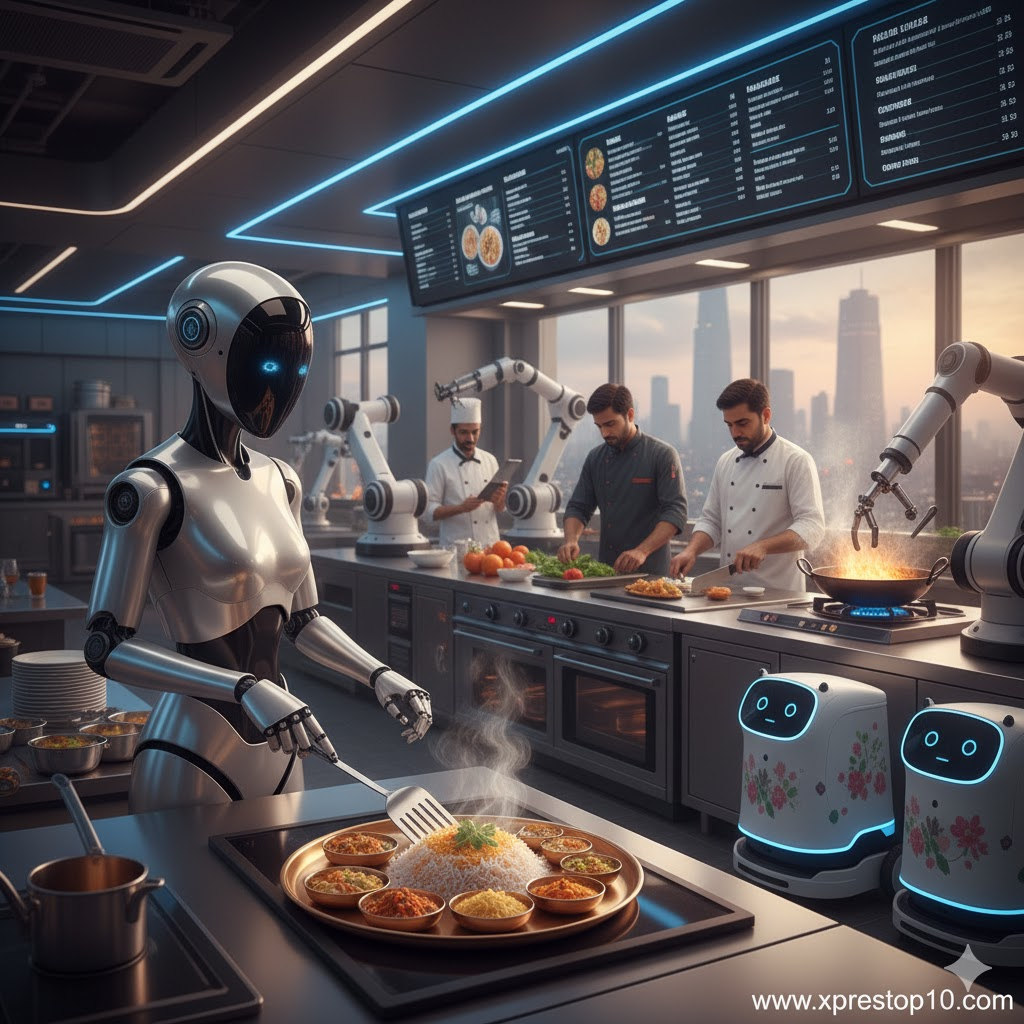
AI-powered kitchens help cut food waste, optimize energy use, and make dining more eco-conscious. Robots measure every portion accurately and can even suggest recipes based on leftover ingredients.
It’s not just smart dining — it’s sustainable dining.
🔗 Learn More
- Deloitte: The Future of AI in Restaurants
- Sweetgreen’s Robotic Kitchen
- Moley Robotics – The World’s First Robotic Kitchen
- NRAI India 2025 Report
- Planner 5D – Design Your Restaurant Layout
🥂 The Final Bite
Dining in 2025 isn’t losing its human touch — it’s gaining a new rhythm. Robots may prepare your meal or bring your coffee, but the experience, the laughter, and the comfort of sharing food remain beautifully human.
Next time a robot serves you, smile. It’s not taking someone’s job — it’s giving the chef more time to perfect your favorite dish.
Ending Keywords:
AI for restaurant marketing, AI restaurant app, AI restaurant design, AI in restaurants Deloitte, AI restaurant recommendations, AI restaurants near me, robotics in restaurants, future of dining 2025