


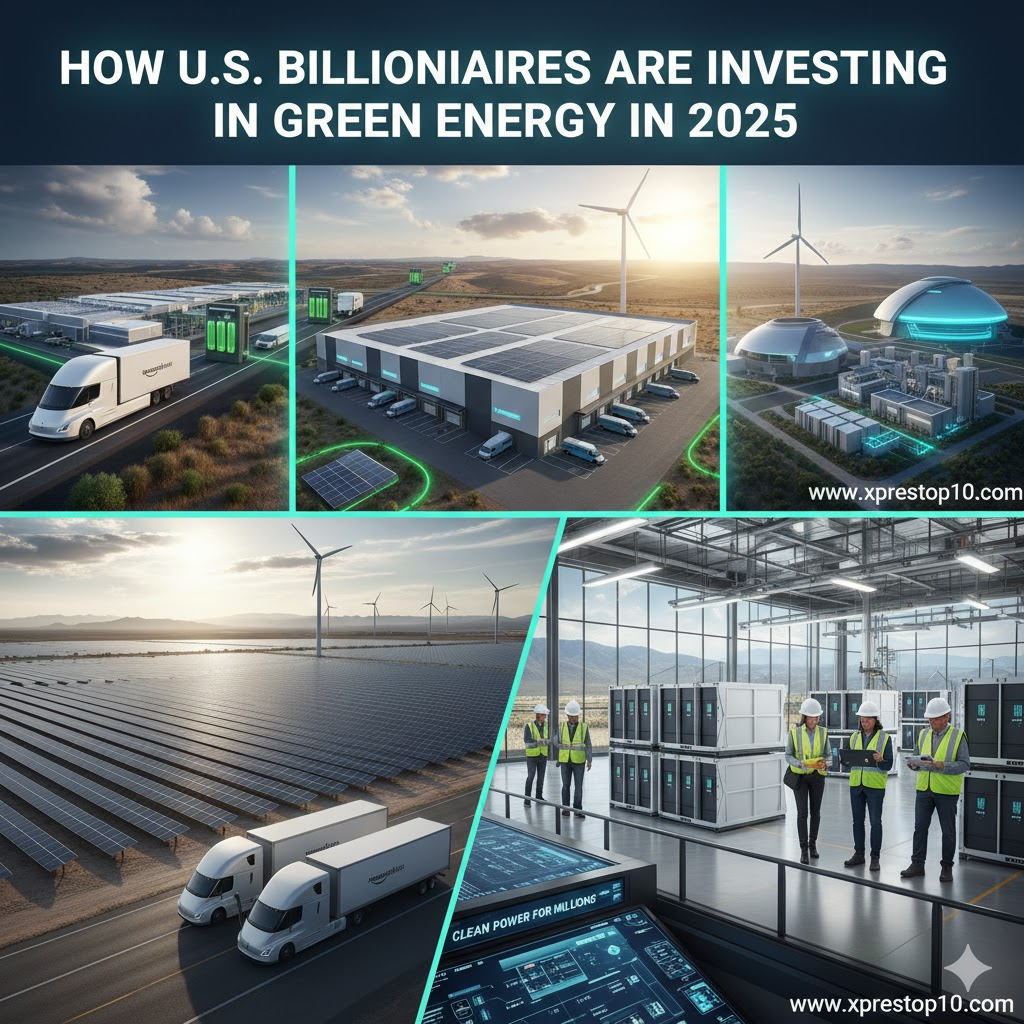
If there’s one thing the 2020s have made clear, it’s that climate action is no longer optional — it’s urgent. Across America, renewable energy is no longer a futuristic concept; it’s happening right now. Solar farms are lighting up the Midwest, electric trucks are rolling through Texas, and battery plants are creating jobs in towns that once relied on coal.
What’s truly interesting, though, is who is driving a big part of this transformation — America’s billionaires. People like Elon Musk, Jeff Bezos, and Bill Gates aren’t just investing in tech or space anymore; they’re putting serious money into green energy. And it’s reshaping the country’s economic and environmental future.
Table of Contents
Elon Musk: Still Charging America’s Future
Let’s start with the obvious — Elon Musk has practically become the face of clean energy. His company, Tesla, isn’t just selling electric cars anymore. In 2025, the company’s Energy division is quietly becoming a powerhouse in its own right.
The Tesla Powerwall and Megapack batteries are now being installed everywhere — from California schools to small towns in Arkansas. The recently expanded Gigafactory in Nevada is helping produce enough energy storage units to stabilize entire city grids.

And remember SolarCity, which once struggled to take off? It’s back in the spotlight under Tesla Energy. Musk’s new push for “Energy for Everyone” makes solar panels affordable through flexible monthly plans — something families can actually budget for.
“Elon isn’t just selling EVs anymore,” wrote an analyst in Forbes Energy Review 2025. “He’s quietly building America’s next power grid.”
Love him or not, it’s hard to deny his role in making clean energy cool — and more importantly, accessible.
Jeff Bezos: Turning Amazon Into a Green Giant
When Jeff Bezos launched the Bezos Earth Fund in 2020, some people rolled their eyes, assuming it was another billionaire PR move. Five years later, that narrative has changed completely.
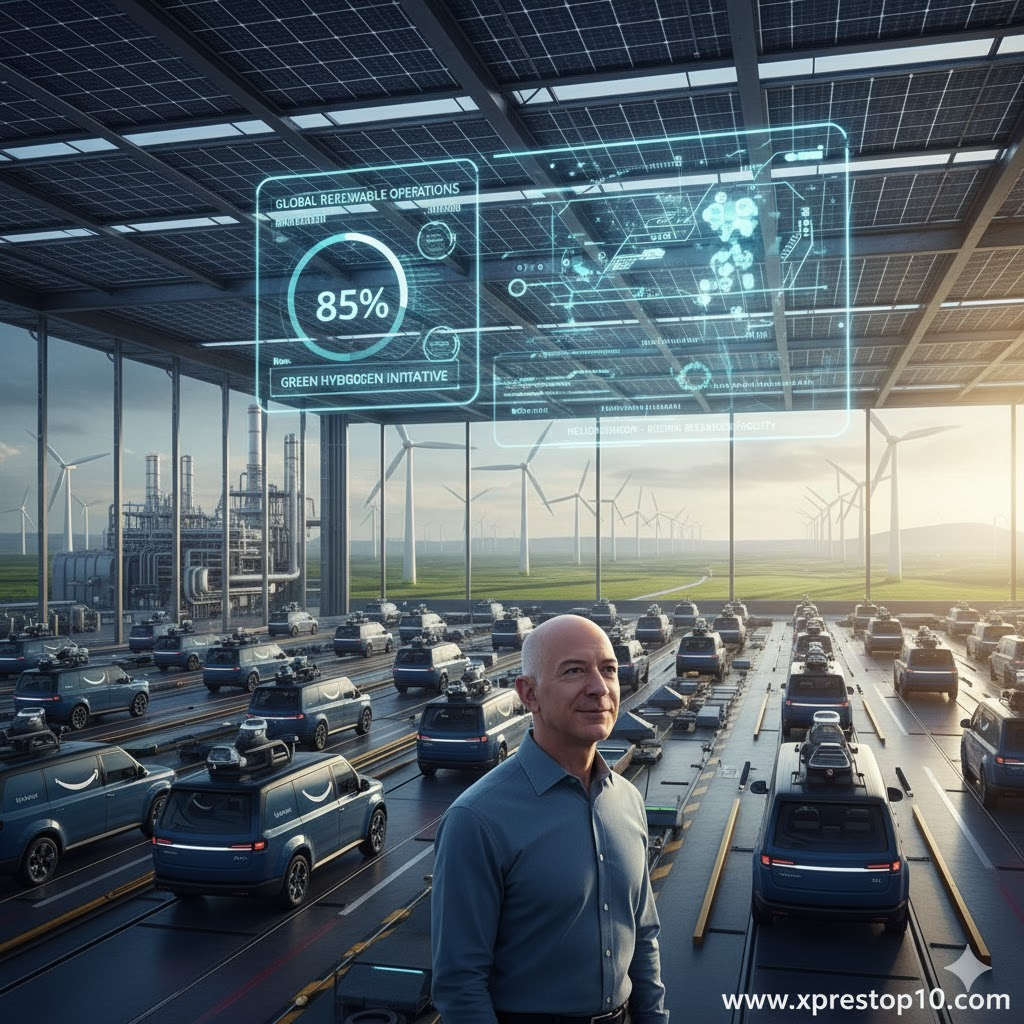
By 2025, Amazon runs 85% of its global operations on renewable power, with massive wind farms spread across Texas, Illinois, and Kansas. Walk into an Amazon warehouse today, and you’re likely to see solar panels covering the roof.
Then there’s Rivian, the electric vehicle startup that Bezos backed early. Those Rivian vans are now a regular sight on U.S. streets — silent, electric, and painted in Amazon’s blue.
But Bezos’s ambitions go beyond logistics. He’s also pouring funds into green hydrogen, a clean fuel that could someday replace diesel for long-haul trucks and planes. He’s even quietly funding research into nuclear fusion through Helion Energy, a company hoping to unlock the holy grail of sustainable power.
As one industry observer put it: “For Bezos, sustainability isn’t just a corporate checkbox — it’s the next trillion-dollar opportunity.”
Bill Gates: Betting on Brains Over Buzz
While Musk grabs headlines and Bezos scales big projects, Bill Gates takes a different route — one that focuses on long-term innovation.
Through Breakthrough Energy Ventures, Gates invests in startups that tackle tough climate problems — the kind that don’t make flashy headlines but could actually change the world.
In 2025, his clean-tech portfolio includes everything from carbon capture systems to low-emission cement and next-gen nuclear plants. His company TerraPower is building an advanced nuclear reactor in Wyoming that promises zero emissions and high safety.
Then there’s Form Energy, another Gates-backed company creating long-duration batteries that can store power for days, not just hours. These innovations might sound technical, but their real impact is simple — reliable, affordable clean power for millions of homes.
In a recent interview, Gates said something that stuck:
“The world doesn’t need more promises. It needs scalable solutions that actually work.”
That’s been his mantra — slow, steady, and science-driven.
Other Billionaires Joining the Green Race
It’s not just the big three. A growing number of U.S. billionaires are joining the clean energy movement in 2025 — and in their own ways:
- Laurene Powell Jobs (Emerson Collective) is supporting coastal restoration projects and climate education in California.
- Michael Bloomberg is still funding the Beyond Carbon campaign, pushing states to retire coal plants faster.
- Mark Cuban, known for his Shark Tank deals, is investing in renewable energy startups — from solar roofing tech to home battery systems.
- Larry Fink, CEO of BlackRock, has made sustainable investing mainstream. His firm now manages over $2.3 trillion in ESG-focused assets, making green finance impossible to ignore.
Together, these moves aren’t just changing industries — they’re redefining what business leadership looks like in an age of climate urgency.
Why Billionaires Are Betting Big on Green Energy
So why are the world’s richest people suddenly obsessed with solar panels, batteries, and hydrogen?
For one, the numbers make sense. The U.S. Energy Information Administration (EIA) projects renewable energy will make up over half of America’s electricity generation by 2030. Costs of solar panels and wind turbines have dropped by more than 70% in the past decade, while battery efficiency keeps improving.
Simply put: green energy is no longer charity — it’s smart business.
Investors are taking note. Clean-energy ETFs like ICLN and TAN have become top performers in 2025. Companies that once depended on fossil fuels are now racing to rebrand as sustainable innovators. And the billionaires who saw this early? They’re reaping the rewards.
It’s Also About Jobs — and Justice
Beyond profits, there’s a deeper impact unfolding. The clean energy boom is creating thousands of new jobs — especially in states that used to rely on oil or coal.
Tesla’s factories in Nevada, Amazon’s wind sites in Texas, and Rivian’s assembly plants in Illinois are hiring engineers, electricians, and technicians at record rates. Many are former fossil-fuel workers who’ve been retrained for the renewable industry.
At the same time, initiatives like Bezos’s Green Workforce Fund and Gates’s Climate Education Programs are helping young Americans build sustainable career paths.
For many communities, clean energy isn’t just an environmental win — it’s a second economic chance.
The Road Ahead: Capital Meets Conscience
As climate events grow harsher — wildfires in the West, floods in the South — the need for bold climate leadership has never been clearer. Governments can set policies, but billionaires can often move faster.

Of course, critics argue that relying on billionaire philanthropy isn’t a long-term solution — and they have a point. Yet, the influence and resources of these individuals can spark progress that otherwise takes decades.
When Musk accelerates EV adoption, Bezos reimagines logistics, and Gates funds long-term research — they’re not just chasing profit. They’re building a new version of American progress — one that runs on innovation, responsibility, and renewable energy.
If history remembers the 2020s as the decade when clean energy went mainstream, these billionaires will have played a massive part in making it happen.
🔗 Helpful Resources
Final Thought
America’s billionaires used to compete over rockets, tech startups, and online empires. Now, they’re competing over who can power the future.
In 2025, it’s clear: the real wealth isn’t just in dollars — it’s in making sure the planet still has a future worth living in.