


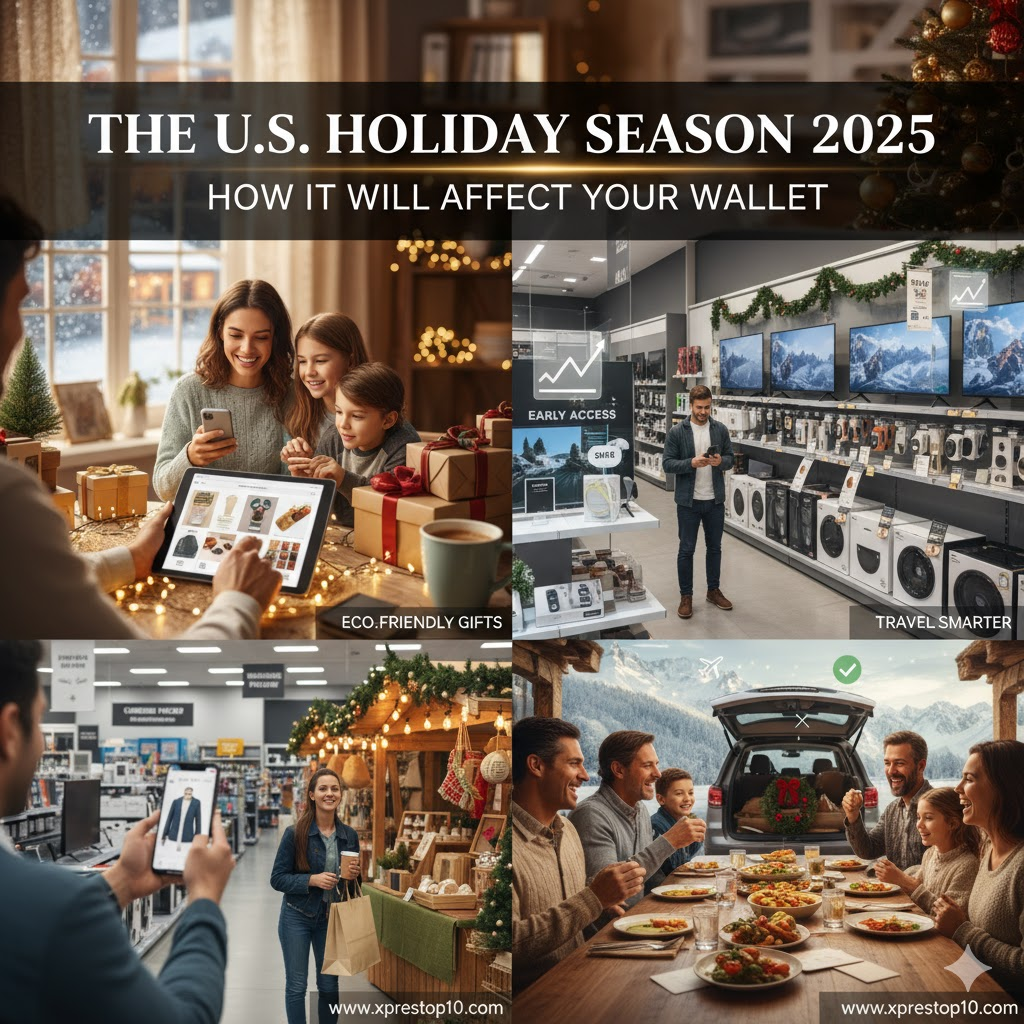
If there’s one thing most Americans can agree on, it’s that the holiday season is both wonderful and wallet-draining.
As November rolls in, so does the excitement of gift lists, travel plans, and the scent of cinnamon coffee filling every café. But behind the twinkling lights, many people are quietly wondering — how much will the 2025 holidays actually cost me?
From shopping habits to travel prices, the 2025 holiday season looks different from what we’ve seen before. Reports from PwC and Adobe Analytics suggest a mix of optimism and caution: people are spending, but they’re doing it more thoughtfully than ever.
Table of Contents
🎁 Americans Are Still Spending — But Smarter
The PwC Holiday Spending Report 2025 gives a snapshot of what’s coming: the average American household is expected to spend around $1,620 this year. That’s a small uptick from last year, but it’s not necessarily because people are buying more — it’s because everything costs more.
Inflation has kept prices high, and shoppers are noticing. Instead of rushing to fill their carts, people are making detailed lists, comparing deals, and using price-tracking apps like Honey or CamelCamelCamel to make sure they’re getting a good bargain.
One mom from Ohio told a local news outlet, “I’m still buying gifts for my kids, but I’ve started shopping earlier this year and keeping an eye out for discounts. Every little bit helps.”
Even Black Friday — that once-chaotic shopping event — is looking calmer in 2025. Many deals are stretched across November now, with online retailers offering “early access” sales that start weeks before Thanksgiving.
If you want a full look at PwC’s research and calendar, you can visit their official U.S. Holiday Outlook page.
💳 Inflation and Interest Rates Are Changing Habits
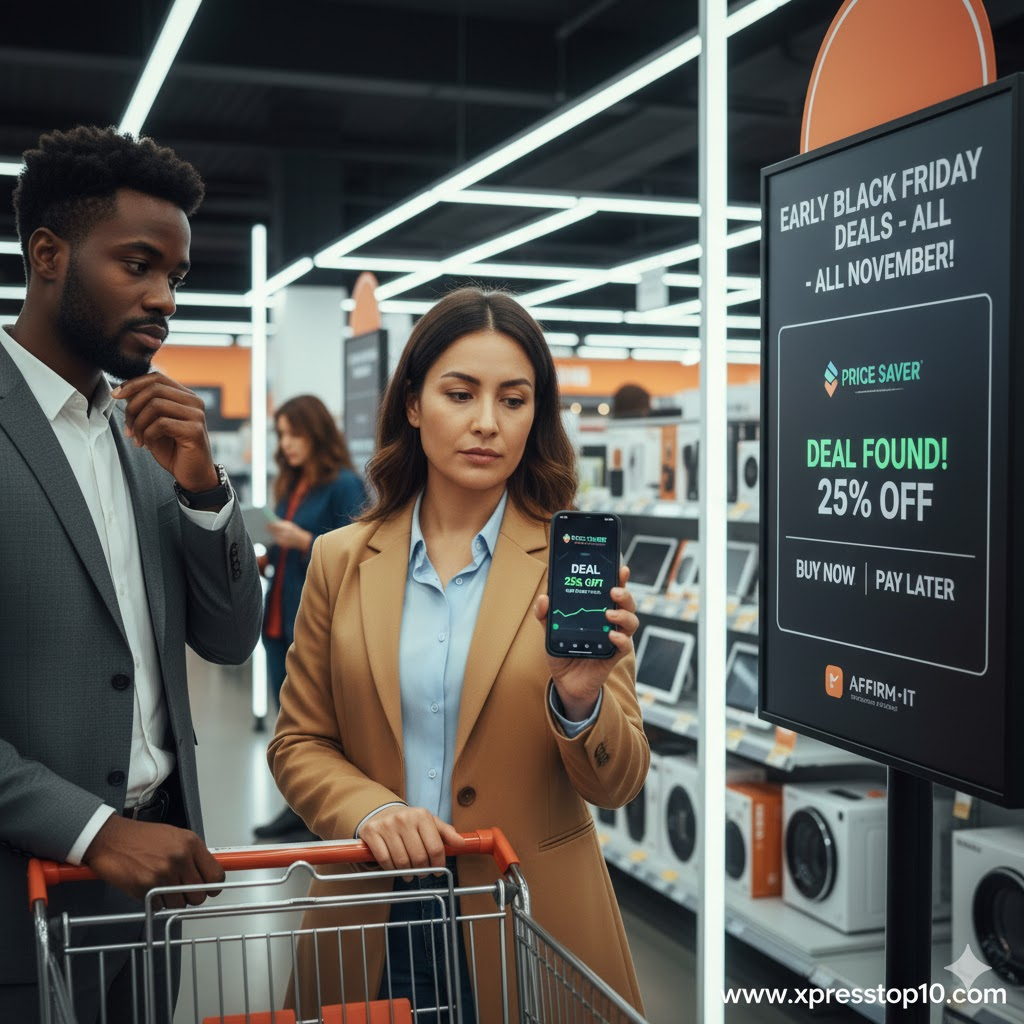
Inflation might have cooled a bit from its 2023 peak, but it’s still reshaping how Americans shop. Prices for groceries, travel, and electronics remain about 3–4% higher than last year.
That’s pushed more people toward flexible payment options. “Buy now, pay later” services like Affirm and Afterpay have become holiday staples — not just for luxury gifts but for basic purchases too.
Another noticeable trend? Practical gifts. Consumers are skipping novelty items and focusing on things that actually make life easier — like kitchen appliances, wearable tech, or travel experiences. It’s less about quantity this year, and more about meaning.
🌿 Conscious Consumerism Is the 2025 Holiday Trend
A big shift that retailers can’t ignore: eco-conscious and value-based shopping.
From reusable wrapping paper to secondhand finds, people are trying to make their holiday spending more sustainable.
Websites like ThredUp and Facebook Marketplace have reported higher traffic leading up to the holidays, while small businesses are seeing a boost from shoppers tired of big-box sameness.
And according to Adobe Analytics’ Black Friday projections, product listings mentioning “sustainable” or “eco-friendly” are up 42% compared to last year.
That says a lot about what Americans care about in 2025 — not just prices, but purpose.
You can check Adobe’s real-time digital economy data here.
✈️ Travel Costs Are Hitting Hard

Planning to fly home for the holidays? Be prepared: airfare is up roughly 12% compared to 2024. Data from travel sites like Expedia shows that the busiest (and priciest) days to fly will be December 20–23, while flying on Christmas Day or New Year’s Eve might actually save you money.
Hotel rates have climbed too, especially in major cities like New York, Miami, and Los Angeles, where holiday tourism is back in full swing. Some families are skipping airports altogether and choosing road trips instead — trading flight delays for scenic drives and cozy Airbnbs.
As one travel blogger put it, “People still want to go somewhere, but they’re doing it differently — shorter trips, closer to home, and smarter with timing.”
If you’re planning your own getaway, midweek flights and early bookings (at least six weeks ahead) can make a real difference.
🛍️ The “Phygital” Shopper Is Here to Stay
The word might sound strange, but “phygital” — a blend of physical and digital — perfectly sums up how Americans are shopping in 2025.
People are browsing in stores but finalizing purchases online, or vice versa. Stores like Target and Best Buy are making that seamless by offering curbside pickup and AR-powered virtual previews.
And while it’s easy to think online shopping has won, in-store experiences are quietly making a comeback. Shoppers want to touch, test, and feel products before buying — something the internet can’t replicate (yet).
Adobe predicts that Cyber Monday 2025 could bring in a record $14.8 billion in online sales, proving that even in a hybrid world, digital still dominates when it comes to deals.
📅 PwC’s Holiday Calendar: A Useful Planning Tool

Beyond shopping, the PwC U.S. Holiday Calendar 2025 has become a go-to resource for companies and consumers alike. It outlines major holidays, retail peaks, and federal closures that impact everything from store hours to shipping schedules.
It’s also handy for anyone planning vacation time. You can download the full calendar from PwC’s official site.
Interestingly, PwC India’s 2025 holiday calendar is also trending this year, as many businesses with global teams coordinate year-end schedules between the U.S. and Asia.
📊 A Quick Look at 2025’s Holiday Trends
| Trend | What’s Happening | What It Means |
|---|---|---|
| Spending | Up 3% overall | Driven by higher prices, not more purchases |
| Top Gifts | Tech gadgets, home goods, experiences | People want practical, lasting items |
| Shopping Style | Hybrid (online + in-store) | Convenience rules |
| Eco Focus | Up 40% YoY | Green gifting is mainstream |
| Top Spenders | Millennials & Gen Z | Younger consumers value experiences |
💬 It’s Not Just About Money
Despite all the data, there’s something beautifully human about how Americans are approaching the holidays this year.
After years of economic uncertainty, people seem to crave connection more than consumption.
Many are swapping extravagant gifts for shared experiences — dinners with family, charity donations, or homemade presents. According to PwC’s survey, 78% of respondents said they’d rather make memories than spend more money.
Maybe that’s the real trend of 2025 — not inflation or tech, but gratitude.
💡 Quick Tips for Smarter Holiday Spending
- Start early — prices usually jump in the last two weeks before Christmas.
- Use browser tools for price comparison.
- Plan travel smartly — midweek or holiday flights can save hundreds.
- Support local — small shops often offer better value (and friendlier service).
- Avoid emotional spending — those “flash deals” aren’t always worth it.
🎄 Final Thought
The holidays aren’t getting any cheaper, but they are getting smarter.
Between mindful shopping, digital deals, and eco-conscious choices, 2025 might just be the year Americans finally balance joy with financial sanity.
So, as you sip your peppermint mocha and scroll for deals, remember — your wallet doesn’t have to suffer for the season to shine bright.
External References:
- PwC U.S. Holiday Outlook 2025
- Adobe Digital Economy Index
- PwC Holiday Calendar 2025
- Expedia Holiday Travel Tips
Tags: holiday season USA, PwC holiday spending 2025, Adobe analytics black friday, holiday shopping trends 2025, holiday spending statistics, US economy 2025, Christmas shopping, PwC calendar 2025, conscious consumerism, holiday travel costs